
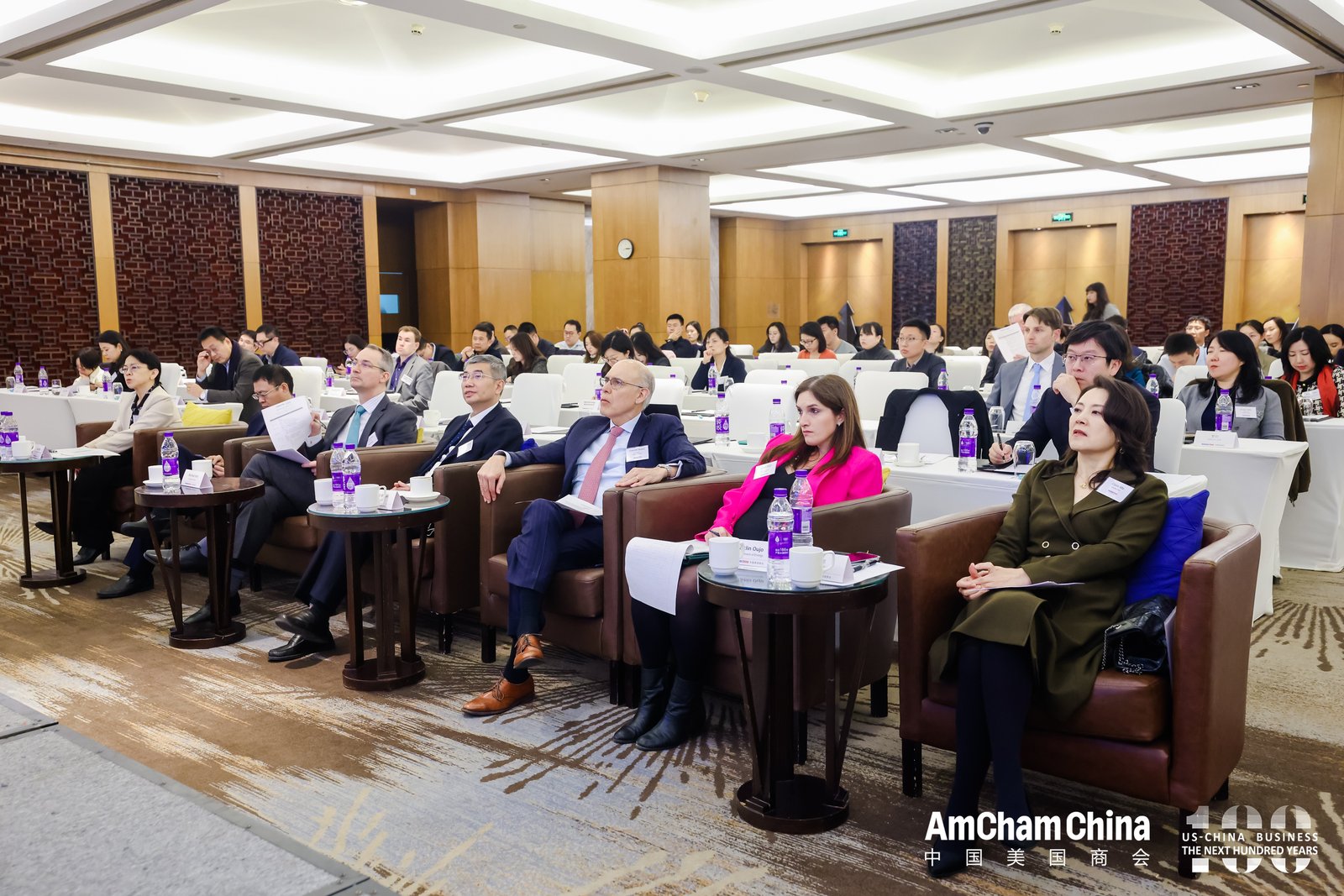
On December 11, AmCham China convened its 2025 Energy Industry Annual Meeting in Beijing. Nearly 100 participants attended, including representatives from energy and commerce authorities of both the US and Chinese governments, domestic and international energy and technology companies, research institutions, industry associations, and AmCham China member companies.
AmCham China Vice President Claire Ma moderated the meeting, and AmCham China President Michael Hart delivered opening remarks. The program also included keynote addresses by Everett Wakai, Minister Counselor for Commercial Affairs at the US Embassy in China, and Xiong Minfeng, Deputy Director General of the National Energy Administration’s Department of International Cooperation.
Hart noted that energy remains central to global economic development and sustainable growth. He emphasized that the transition toward cleaner, more efficient, and more resilient energy systems is one of the defining challenges of our time, and a major opportunity for cooperation between the US and China. Deepening bilateral cooperation in the energy sector, he said, can improve efficiency, reduce costs, accelerate innovation, and support sustainable development. In a period of heightened global uncertainty, energy cooperation also plays an important role in reinforcing stability and trust.
Xiong highlighted the importance of strengthening US-China cooperation in the energy sector and called for continued collaboration to build an open and resilient framework for bilateral engagement. He noted that the Fourth Plenary Session of the 20th Central Committee of the Communist Party of China (CPC), held in October, outlined China’s development blueprint for the next five years, including plans for the energy sector. He also welcomed deeper participation by US companies in China’s energy development and construction during the country’s “15th Five-Year Plan” period to support expanded commercial cooperation.
Zeng Shaojun, Secretary General of China New Energy Chamber of Commerce (CNECC), delivered a keynote titled “Global Climate Response and China’s Low-Carbon Energy Development”. He discussed how China’s new energy development is shifting focus from power generation efficiency to utilization and consumption, with changes on both the supply and demand sides. Policy-driven growth is giving way to market-driven development, with an emphasis on multi-energy complementarity centered on energy storage. New application scenarios continue to emerge, and innovative fields such as artificial intelligence are expected to drive sustained industry growth.
Kaitlin Oujo, Director of the US Department of Energy China Office, outlined key elements of the Trump administration’s “energy addition” approach, which prioritizes expanding oil, gas, and LNG exports, including the Alaska LNG project, while easing related approval processes to support US-China energy trade. She also highlighted increased investment in research and development in nuclear energy, including small modular reactors, as well as hydropower and other areas, to address future electricity demand and ensure energy reliability, affordability, and security.
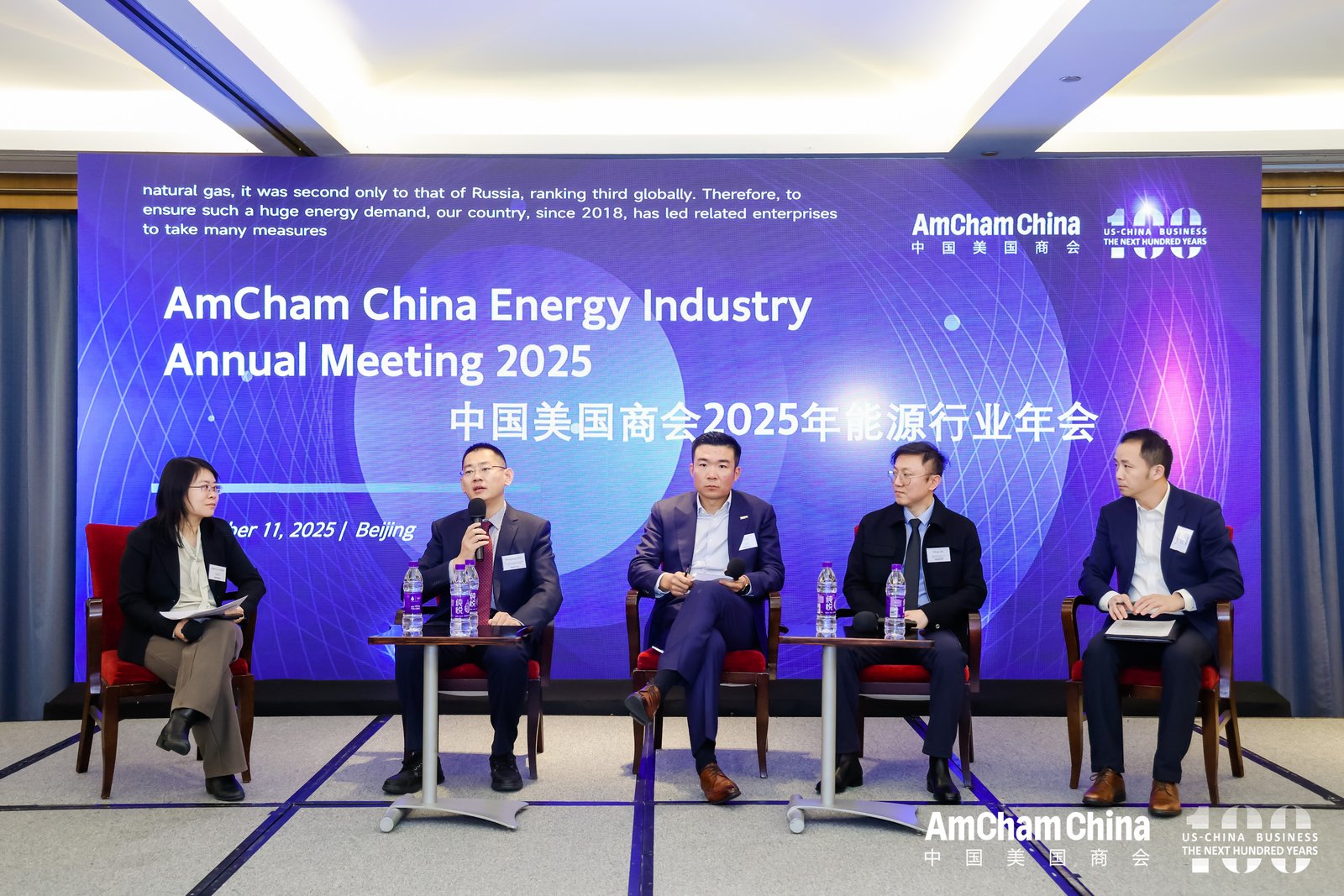
Panel 1: US–China Energy Cooperation and Trade
Moderater: Huang Miaoru, Research Director for Asia-Pacific Gas and LNG at Wood Mackenzie.
Panelists:
- Hou Mingyang, Deputy Director of the Planning Institute at Sinopec Petroleum Exploration and Production Research Institute
- Chris Li, China Director of Cheniere Energy
- Cai Ming, Head of Global Oil and Gas Market Research at ENN Natural Gas
- Ramon Hu, Market and Strategy Director of Halliburton China
Panelists discussed recent developments and future prospects for bilateral cooperation. While China has made progress in increasing oil and gas reserves and production in recent years, participants noted that continued opening and cooperation remain important to ensuring energy supply. The United States has become the world’s largest LNG exporter, accounting for roughly one quarter of global LNG trade and offering supply flexibility for buyers such as China. In the oil and gas services sector, US oilfield service companies have a long history of cooperation with China’s national oil companies, and US and Chinese firms have also made progress in third-country oil and gas development projects. Participants noted ongoing cooperation potential across oil and gas trade, engineering services, technology development, talent exchange, and equipment supply.

Panel 2: Energy Industry Outlook
Moderater: Shen Gang, Director of Corporate Communications at Energy Foundation China.
Panelists:
- Zhang Jingjie, Deputy Director of the Planning and Development Department at the China Electricity Council (CEC)
- Ryan Xiao, Vice President of the China Hydrogen Alliance Research Institute
- Grace Chen, Senior Solutions Director for Greater China at Emerson AspenTech
- Feng Yanhong, Deputy Chief Engineer at North China Power Engineering Co., Ltd. of the China Power Engineering Consulting Group (CEEC)
The discussion focused on China’s “15th Five-Year Plan” for energy development, with panelists sharing perspectives on overall industry trends and key renewable sectors such as wind, solar, and hydrogen. Panelists also discussed the impact of AI technologies across energy production, dispatch, and management. Speakers expressed generally positive views on future cooperation between China and the United States and highlighted the importance of continued dialogue and practical collaboration.
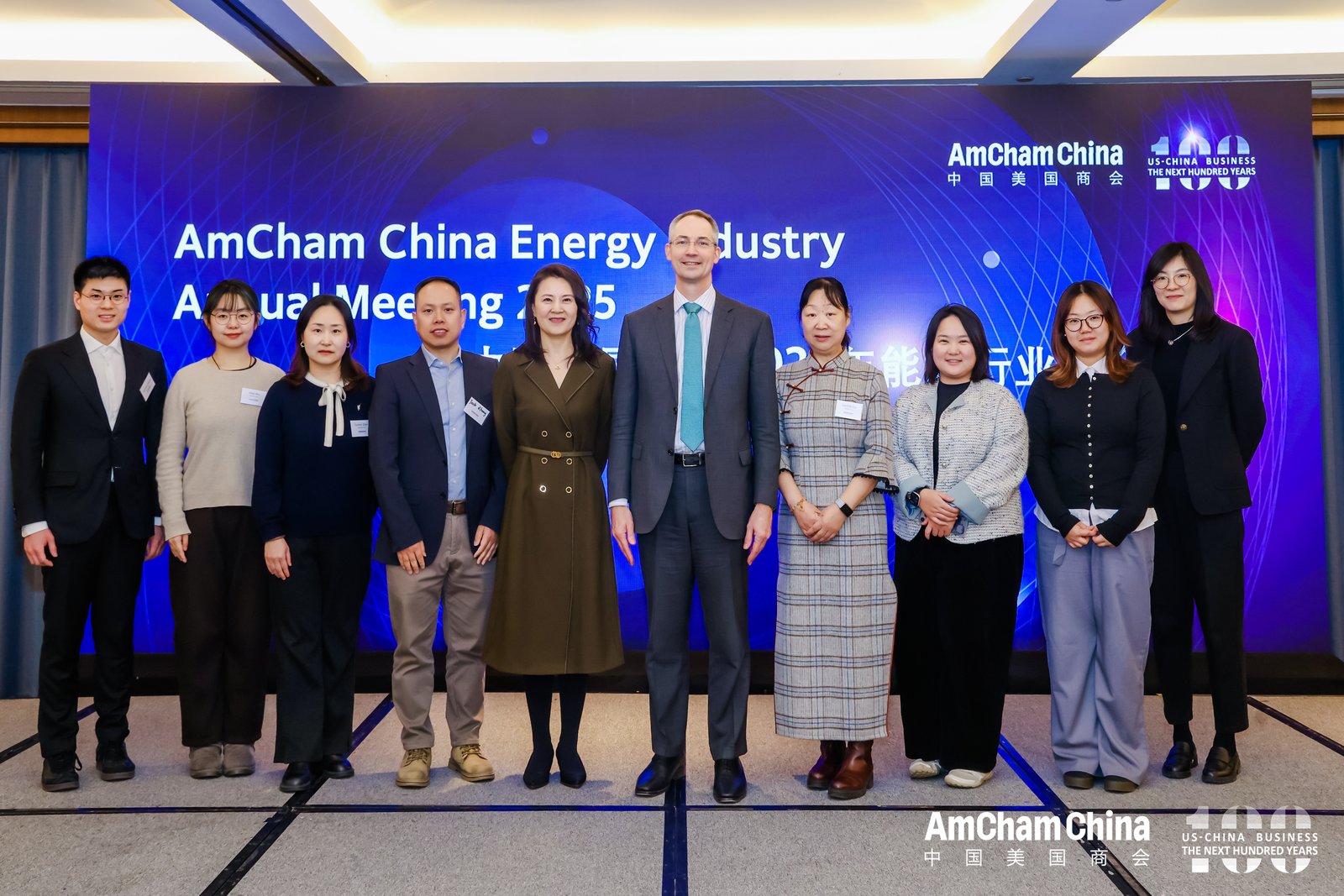
The annual meeting offered an opportunity for exchange among US and Chinese energy stakeholders. Looking ahead, continued communication and commercially grounded cooperation will remain important for advancing bilateral engagement and supporting the global energy transition.