Learning in the Age of AI: How China’s International Schools Are Adapting
Artificial intelligence (AI) is no longer a futuristic concept; it is a present-day reality that is rapidly reshaping industries around the world. One area where its impact is being closely observed is education. For international schools in China, where diverse curricula and global education standards intersect, the integration of AI brings both exciting opportunities and significant new challenges. In this feature, we spoke with educators, students, and school administrators to learn how they are adapting to – and reimagining learning in the age of AI.

International education institutions are often regarded as some of the most forward-thinking and high-quality primary and secondary education options available to families. Their emphasis on innovative approaches, cultural diversity, and rigorous curricula has made them the top choice for globally-minded parents. As these schools strive to stay ahead of emerging trends and technologies, they are now turning their attention to one of the most transformative forces in modern education: artificial intelligence.
These strengths are especially critical today, as AI tools, from adaptive learning platforms to generative models like ChatGPT and DeepSeek, become embedded in everyday school life. The pace of change is striking: in just the past two years, many schools have evolved from early-stage experimentation to implementing structured policies, targeted professional development, and even student-centered frameworks for AI ethics.
Yet the integration of AI is not uniform. Schools vary widely in how deeply and strategically they deploy these technologies. At Wellington College Tianjin, AI supports a blend of administrative efficiency and immersive learning through platforms like Kognity and Futuclass VR. The Western Academy of Beijing (WAB) has developed an AI ethics code that prioritizes transparency and learning, encouraging students to responsibly engage with AI tools like MagicSchool and Diffit. Meanwhile, at ISA Wuhan International, administrators are adopting a more cautious approach, acknowledging the promise of AI but placing emphasis on preserving the “human touch” at the heart of their instruction.
The shift is also student-driven. As tech-savvy learners have quickly discovered the advantages of using AI for everything from summarizing biology concepts to generating LaTeX code for research projects. Some see AI as a productivity booster; others recognize the danger of “metacognitive laziness,” relying too heavily on machines at the cost of true learning. This duality underscores a critical truth: AI’s impact is as much about mindset as it is about technology.
At the heart of this transformation lies a fundamental question: How can schools harness AI to enrich education without compromising the quality and depth of student learning? For this feature, we interviewed administrators, students, educators, and parents from China’s leading international schools to explore how they are navigating this evolving landscape, seeking a delicate balance between innovation and integrity in education. AI is helping redefine traditional education philosophies, prompting the inclusion of digital citizenship, AI literacy, and coding curricula. At the same time, educators warn of potential risks: diminished critical thinking, inequities in access, and challenges to academic integrity.
Rather than grouping responses by institution, this discussion is grouped by subtopic, from current adoption and curriculum redesigns to ethical implications and future trends. What emerges is a compelling story of cautious optimism. Schools are not blindly adopting new technologies. They are questioning, evaluating, and iterating, always striving to enhance student outcomes while staying true to their core values. In many ways, the responses mirror the broader educational mission: to prepare students not just for exams, but for the unpredictable demands of a rapidly evolving world.

Current Adoption of AI in International Schools
As AI tools become more embedded in school life, international institutions are finding diverse ways to integrate them into teaching, administration, and student learning. This section explores how schools are currently using AI across these different domains.

“At Wellington College Tianjin, we deploy AI to support both teaching and administration, boosting efficiency and—most importantly—student outcomes. Adaptive learning platforms such as Tassomai for science, IXL for English and math, and Kognity for economics and science personalize content to each pupil’s progress. Generative tools like ChatGPT lighten teachers’ workloads by helping with lesson planning and resource creation, while Curipod speeds up the production of classroom presentations. For English language acquisition, Microsoft Reading Progress and Reading Coach provide real-time feedback that strengthens literacy skills. On the administrative side, AI streamlines library management through a scanned book database and grades multiple-choice assessments via ZipGrade. We also pair AI with virtual-reality software—Futuclass VR in chemistry, for example—to create immersive, curriculum-aligned learning experiences.”
Dr. Yang
Head of Tianjin Wellington College
“At the Western Academy of Beijing (WAB) we use AI widely, but always under clear guidelines for transparency, accuracy, and learning. The aim is to enhance—never replace—critical thinking, interaction, and overall learning quality. In the high school, library and ed-tech staff lead workshops that show students how to find reliable sources through AI-enhanced academic search. Several teachers have built centrally managed AI tutors with Flint, particularly for language learning, giving students extra feedback and practice. Large language models also support staff in communication, lesson planning, and idea refinement, but are never used to outsource thinking. Tools such as MagicSchool help tailor materials to different reading levels and home languages, while LUDIA and Diffit promote inclusive practices. Students themselves now use age-appropriate AI for brainstorming, project development, and structuring their work. Finally, core platforms we already rely on—Microsoft, Canva, and others—offer AI features that we adopt when they clearly add value.”
Stephen Taylor
Director of Innovation in Teaching and Learning, Western Academy of Beijing

“AI has brought clear advantages, most notably in personalized learning and in day-to-day efficiency. Adaptive platforms adjust content to each student, making differentiation easier and lifting academic results. Teachers get real-time data, allowing them to spot gaps quickly and target support. In our multilingual classrooms, AI-driven translation and language-development tools also make lessons more inclusive. But challenges remain. We are mindful of data-privacy risks, algorithmic bias, and broader questions of ethical use. Ongoing professional development is essential so teachers can deploy these tools responsibly. Above all, we work to keep a healthy balance between technological assistance and meaningful human interaction. At ISA Wuhan we are beginning to explore learning analytics and to streamline operations with AI, yet we keep the ‘human touch’ at the center of our pedagogy. The technology is promising, but it must be applied thoughtfully and always in a student-centered way. Our approach is therefore measured and cautious, ensuring the integrity of human-led learning remains intact.”
Mahesh Selvaraj
Deputy Director of School Development and Curriculum, ISA International Education Group; Deputy Head, ISA Wuhan Campus; Head, ISA Wuhan International School; Co-Head, ISA Wenhua Wuhan School
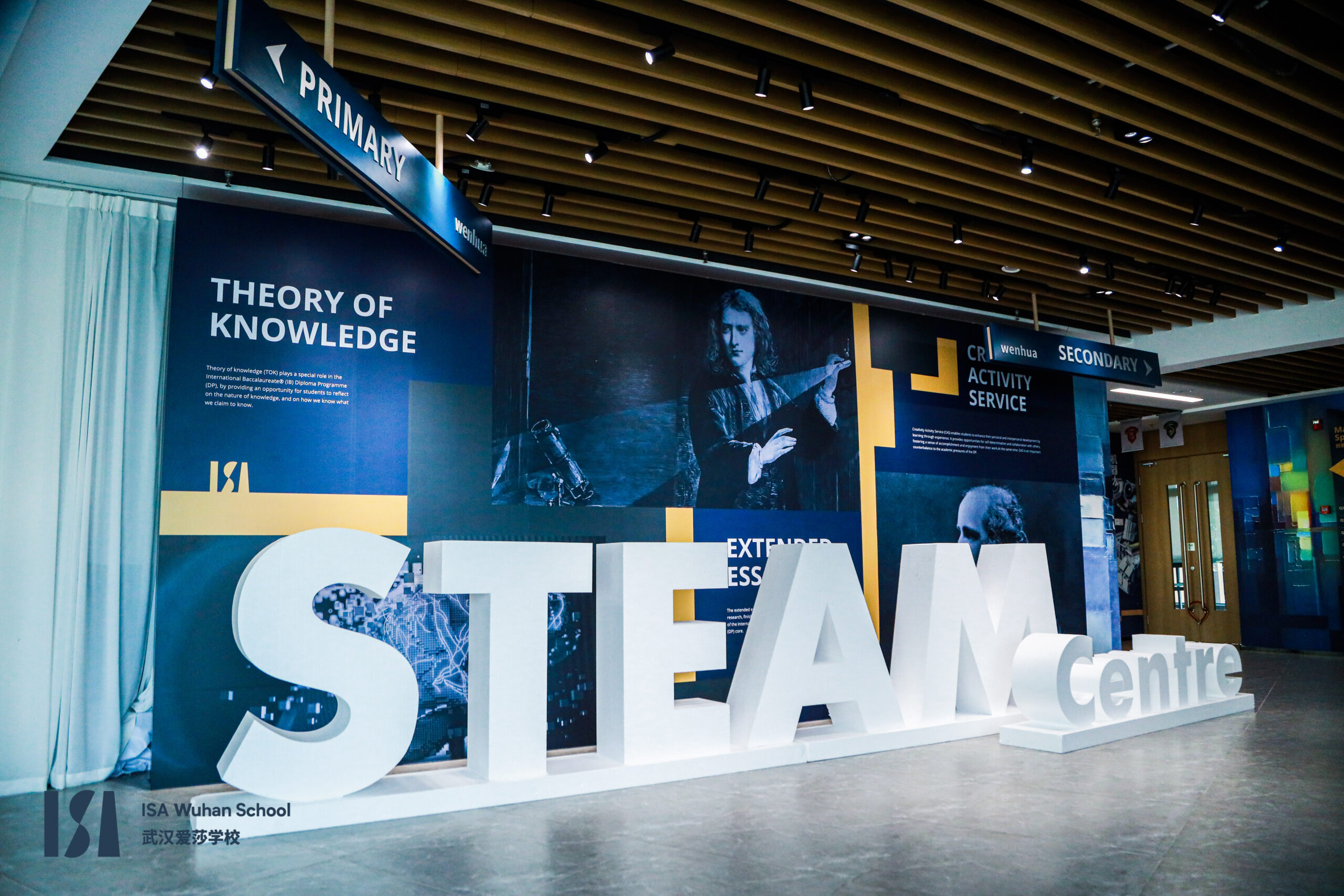
The STEAM Centre of Wuhan ISA International School
Photo courtesy of ISA International School

“AI is impacting the way people process information. This is also true for those in the job search process. People use AI to help them prepare for job interviews, analyze information, and make decisions. Recruiting is about building relationships and finding the right fit between the employee and employer. As people use AI in this process, it can increase efficiency. Some job seekers use AI tools to assist in the application process or to filter through potential employers that match their values. I have seen cover letters and CVs that relied heavily on AI writing. In these cases, it’s essential to discern whether AI is responsible for the content and ideas or if the applicant used it simply for formatting and presentation. We want people who are resourceful and efficient, but we also want to recruit individuals with strong character, passion, creativity, and enthusiasm. School leaders need to be intentional in the recruiting process to understand prospective teachers and what drives them, to determine if they are the right fit. If candidates rely too heavily on AI, they miss the opportunity to demonstrate who they are. On the other hand, it can be a valuable tool to help job seekers find an organization that matches their interests and reduces the mundane and repetitive parts of the process.”
Dr. William Hatten
Head of School, Chengdu International School

“Depending on the information I aim to acquire through AI, the way I interact with it also differs. For instance, when trying to recall the concept of a Lewis acid in chemistry or analogous structures in biology, I find it especially convenient to ask AI for quick reminders. AI tends to have an exceptionally low error rate when providing conceptual replies, which makes sense since concepts are predefined information with minimal room for variation. In addition to being a kind of digital encyclopedia, AI has also been my ‘workhorse.’ It’s especially helpful for taking over repetitive or mechanical tasks, such as generating LaTeX code for a data table, which allows me to focus on higher-level thinking. You never know, sometimes AI really boosts my productivity and just makes life easier. However, when it comes to tasks that require high creative input or logical reasoning, I’m cautious about accepting AI’s output at face value. For complex math problems (which AI isn’t fully trained for), I prefer to use it as a study buddy. By exchanging ideas, and sometimes even correcting its mistakes, I gain important insights that help me arrive at my own solution, rather than jumping straight to an answer that’s meaningless without the logical steps behind it.”
Olivia Xu
Grade 12, Chengdu Meishi International School

“Based on student feedback at QSI, the impact of AI on learning is viewed in different ways. Many students feel that AI can be a helpful tool, especially when it comes to getting quick answers, clarifying difficult concepts, or overcoming moments of confusion when a teacher isn’t immediately available. They say it can make studying more efficient and reduce stress in some situations. At the same time, several students pointed out that AI can become a distraction or a shortcut. They shared that it’s sometimes tempting to rely on AI too much, using it to complete work instead of thinking things through themselves. This can lead to shallow learning and a lack of confidence when facing tests or assignments without AI support. What came through clearly is that students believe AI’s effect on learning depends on the individual. Those who approach it with discipline and clear goals tend to benefit, while others risk using it in ways that don’t truly support their growth. Overall, students recognize that AI can enhance their learning experience—but only when they use it thoughtfully and with intention.”
Christian Wang
Teacher (Science & Mathematics), QSI International School of Chengdu

AI’s Influence on Curriculum & Pedagogy
As AI becomes more prominent in education, schools are rethinking both what students learn and how they learn it. This section looks at how AI is reshaping curriculum design, teaching methods, and classroom dynamics.

“AI has significantly influenced curriculum development in several key areas. In coding and STEAM education, the school has implemented a structured progression in robotics and coding. Pupils begin with Bee Bots and Dot and Dash in the Early Years, move on to LEGO SPIKE Prime and micro:bit in Junior School, and conclude with VEX V5 Robotics in Senior School. These tools help introduce computational thinking and AI concepts from an early age. In terms of AI ethics and digital citizenship, the school has developed its own GenAI Policy—the first in the Wellington China Group—to guide the ethical use of AI tools. This policy emphasizes academic integrity and critical engagement with AI-generated content. Related themes, such as digital citizenship and online safety, are reinforced through dedicated events like Digital Citizenship Week and Safer Internet Week, as well as through the Digital Citizenship Scope and Sequence document, which integrates AI ethics directly into the curriculum. AI is also being used to enhance critical thinking and research skills. Tools like ChatGPT help pupils learn to evaluate sources and conduct research responsibly, while virtual reality experiences (for example, Dino Planet) support inquiry-based learning.”
Dr. Yang
Head of Tianjin Wellington College

“When balancing AI-assisted learning with traditional teaching methods, teachers may face several challenges. These include over-reliance on AI, reduced interpersonal interaction, mechanized learning experiences, weakened emotional connections between teachers and students, and overly structured AI pathways that can lead to cognitive fatigue and limit students' exploratory interests. Additionally, AI tools may carry algorithmic biases that require regular evaluation, and technological disparities can worsen educational inequality. To address these issues, it’s important that teachers retain control over curriculum design. This means prioritizing traditional pedagogical approaches—such as classroom discussions and mentorship—to maintain strong teacher-student relationships and to better understand each student’s personality and psychological state. AI should serve as a supplementary tool, not a replacement. That said, teachers can strategically leverage AI’s strengths. Personalized learning tools, such as intelligent tutoring systems, can adjust content difficulty based on a student’s proficiency. Instant feedback mechanisms, like automated grading and online quizzes, help identify errors quickly and support continuous improvement. However, successful integration requires that AI aligns with instructional goals through deliberate tool selection and adaptation. A blended learning model—combining online AI-assisted activities with offline, teacher-led instruction—is essential to ensure that human interaction remains central to the learning process. AI systems must also be regularly audited for fairness and accessibility, and equitable alternatives, such as offline materials, should be provided to bridge technological gaps. This balanced approach helps preserve the irreplaceable human elements of education while harnessing AI’s efficiency to enhance teaching and learning.”
Naisi Gao
Vice President of Fayao Education Group

“At WAB we are approaching AI at a sensible pace, through intentional and iterative approaches that promote challenging and joyful learning. We look for appropriate entry points that don’t sacrifice engagement and teacher-student relationships. The value of an expert, caring teacher in the classroom is immeasurable and irreplaceable. Innovative uses of AI are supported and monitored, while ongoing curriculum, teaching, and learning are iteratively evaluated to ensure excellent, student-centered, and experiential learning. At all stages, there is transparency in learning through strong relationships, feedback, and interaction.”
Stephen Taylor
Director of Innovation in Teaching and Learning, WAB

“AI is part of the world that our students are growing up in, and its impact will likely continue to increase. Even before AI emerged, we always acknowledged in education that we are preparing students for jobs of tomorrow that do not exist today. We want to equip students to solve problems and make a difference in the world around them, and our assignments and exams should reflect this. Technological innovation may change what that looks like, but it doesn’t change the underlying truth. Schools need to be aware of how AI impacts students and not settle for assessments that can be copied and pasted. High standards for assessments will help schools avoid overreliance on AI. At Chengdu International School, we emphasize student mastery and deep understanding, which will lead students to critical thinking and creativity. Whether or not they use AI as part of their research process, we want to ensure that students can engage with the material, discern truth, apply concepts creatively, and explain their thought processes. New technology always comes with concerns as it can require changes in our processes and procedures, but educators should embrace technology and teach students to use it responsibly.”
William Hatten
Head of School, Chengdu International School

“Yes, I am. Students tend to rely more and more on AI tools these days, and this reduces their critical thinking and writing skills. For subjects like Literature, writing assignments now need to be conducted strictly in class to avoid the use of AI tools, and this also takes up a significant amount of class time. Over-engagement with AI also contributes to a culture of minimal effort, and it reduces students’ engagement with course materials. Also, since students are not directly engaging with the task, ownership of ideas weakens, and this has a deep impact on learning and long-term retention. One of my biggest concerns is what the British Journal of Education Technology calls ‘metacognitive laziness’, which meant a dependence on AI assistance, offloading thought processes to the bot and not engaging directly with the tasks that are needed to synthesize, analyze and explain. For students who are required to research and write in English, which might not be their native language, AI could become a crutch or shortcut. While it might speed up their assignment preparation time, there is a danger they are not learning or retaining as much knowledge as they would if they had to research and write on their own.”
Robert Christensen
Principal at Optics Valley International School
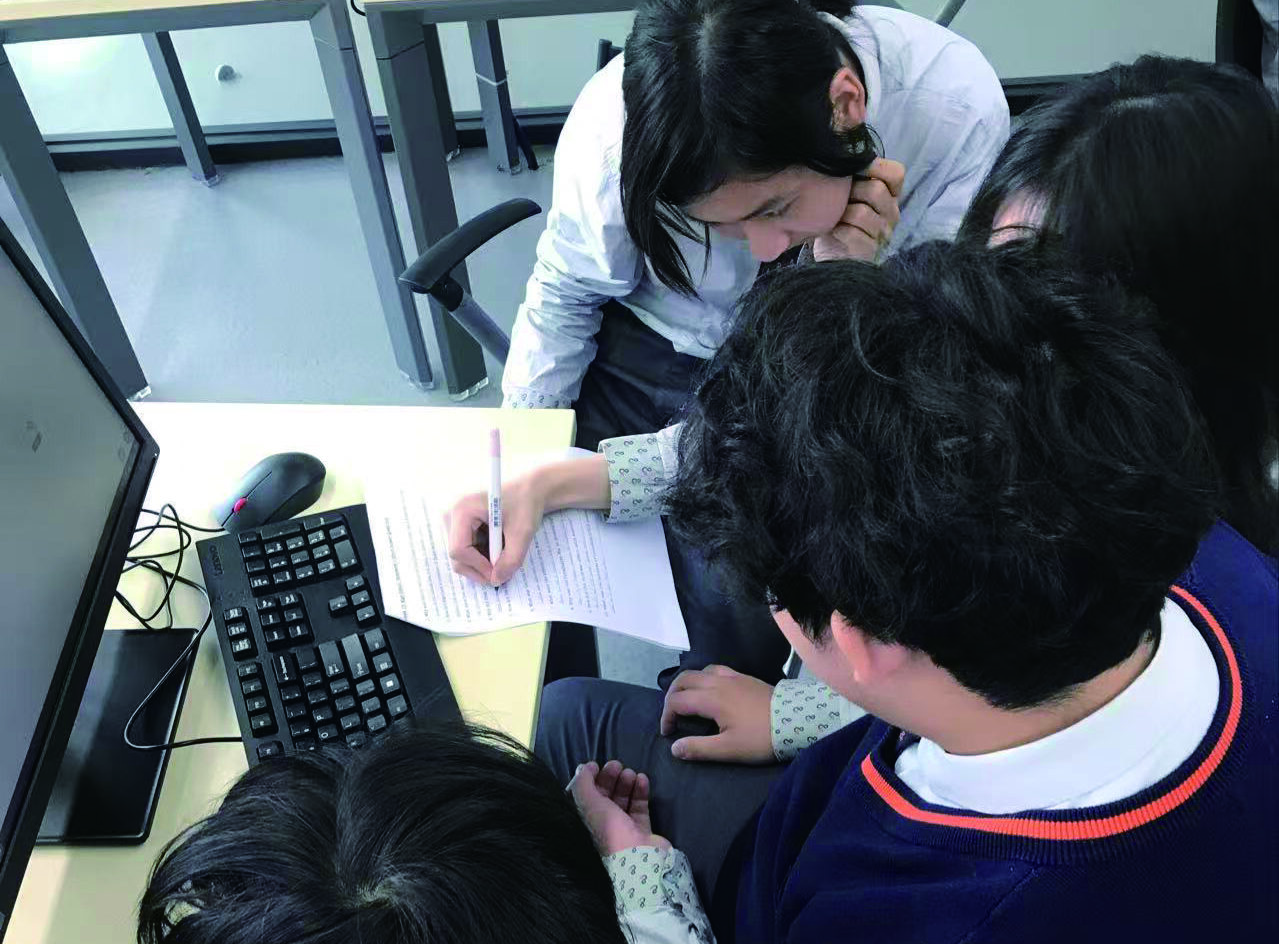
Students using the ‘Scratch System’ before using AI to check their work
Photo courtesy of Optics Valley International School
“It has become increasingly convenient for students like me to obtain and verify information with the help of AI. It has significantly changed the way I approach daily tasks, making my work more efficient and reducing unnecessary effort. For example, reviewing for exams is much less time-consuming—I no longer have to read through the entire book just to find a knowledge point I’ve forgotten. Instead, I can simply ask AI to summarize what I need by typing in keywords. Determining the theme for research projects has also become easier. I don’t need to read every article or paper on a topic to find something engaging to write about. By using AI for inspiration, I can quickly skim recommendations, then refine my focus with more targeted online research.”
A Student
Tianjin Farragut School

Ethical & Societal Implications
With AI’s growing presence in schools, questions around academic integrity, equitable access, and responsible use are becoming increasingly important. This section explores how schools are addressing these challenges.With AI’s growing presence in schools, questions around academic integrity, equitable access, and responsible use are becoming increasingly important. This section explores how schools are addressing these challenges.

“When AI-related plagiarism is suspected, we use anti-plagiarism software to verify concerns. Confirmed AI-related plagiarism results in failing grades and a card-based disciplinary system. However, our school also adopts a balanced approach that aims to educate students. If AI-related plagiarism is detected, we engage with the students to understand the situation and to discuss their motivations. During these conversations, our faculty emphasizes the importance of academic integrity and of an ethical use of AI.”
Robert Christensen
Principal at Optics Valley International School

“QSI treats AI-related plagiarism as seriously as any other academic dishonesty. If students use AI tools and submit the content as their own without acknowledgment, it is considered plagiarism. We emphasize transparency and integrity, guided by the QSI Responsible AI in Learning (RAIL) framework. Rather than reacting to misuse, we focus on education first. Students don’t gain access to generative AI tools until they’ve received appropriate instruction. Like learning to drive, students need to build skills before using powerful tools. This approach helps prevent plagiarism and misuse at the root. We also believe students must first develop independence, creativity, and critical thinking before AI becomes part of their workflow. We consider age and privacy considerations, ensuring all use is appropriate and intentional. Through our AI Literacy Levels, students learn how to cite AI, think critically about its outputs, and apply it in ways that support real understanding. By preparing students before allowing AI access, we promote a culture of ethical, thoughtful, and informed use.”
Christian Wang
Teacher (Science & Mathematics), QSI International School of Chengdu

“At Wuhan Yangtze International School, our one-to-one device program across the grades provides equitable access to technology tools including AI. Overall, we focus on character education and relationships, and specifically in academics we focus heavily on critical thinking and application. Although AI continues to develop rapidly, AI is not yet a replacement for these essential skills. By knowing our students well, we can determine how to best help them on their individualized path. Our students are coached to understand when AI is appropriate and when it is a detriment to their learning. These approaches mitigate the negative effects of AI while preparing them for the challenges of an unknown future.”
Dr. Christopher J. Rehm
Head of School, Wuhan Yangtze International School

“Yes, AI literacy should be a core component of international education. As AI continues to shape the global workforce, students must be equipped not only to use these technologies but to understand their ethical, social, and practical implications. AI literacy fosters critical thinking, digital responsibility, and informed decision-making which are essential skills in any 21st-century context. Incorporating AI into the curriculum doesn’t mean turning every student into a programmer. Rather, it involves helping them grasp how AI systems work, how data influences outcomes, and how to question and interact with intelligent tools thoughtfully. This aligns well with the broader goals of international education: developing global citizens who are adaptable, ethical, and innovative. At ISA Wuhan, we see AI literacy as part of a future-ready education. As we prepare students for a rapidly evolving world, integrating AI understanding into interdisciplinary learning is both timely and necessary. The goal is not just to use AI, but to engage with it responsibly and meaningfully.”
Mahesh Selvaraj
Deputy Director of School Development and Curriculum, ISA International Education Group; Deputy Head, ISA Wuhan Campus; Head, ISA Wuhan International School; Co-Head, ISA Wenhua Wuhan School

“I’ll begin by rephrasing the question: Should AI literacy be mandatory for educators? The education sector has long struggled to keep pace with students’ use of technology. Schools are generally on the responding to technology side when it comes to technological advancements and trying to bring their educators up to speed. I don’t believe AI is any different in that regard. Therefore, schools should start by focusing their education on best practices for all technology. Educating students with critical thinking skills and well-defined safeguarding practices casts a broader net in developing an understanding of appropriate use. Then, schools must specifically address AI by developing comprehensive guidelines and principles that align with their ethos, including both acceptable and unacceptable uses. Finally, schools must invest in professional development for their staff to equip them with the skills necessary to model appropriate educational usage, both in the classroom and in administrative settings. AI is a daily reality, and yes, we must educate and model for our students how to use it with discernment. “nterdisciplinary learning is both timely and necessary. The goal is not just to use AI, but to engage with it responsibly and meaningfully.”
Ryan Witt
Head of School, Tianjin International School
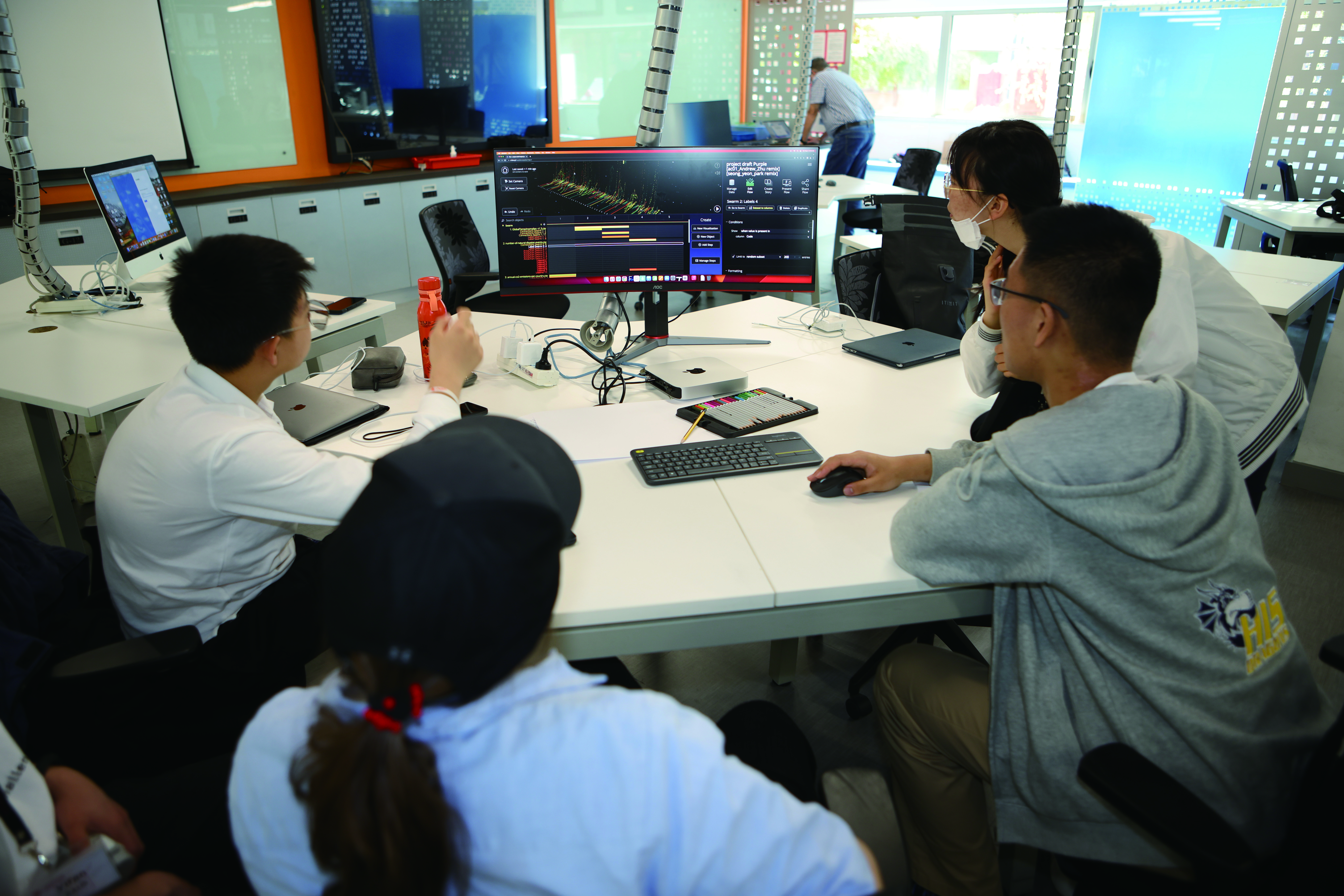
A group of students working on an AI project
Photo courtesy of the International School of Tianjin

“There was a time early on with AI when this was true at our school. However, it has been much less true since our teachers adopted new policies and practices for AI. For students who are interested in learning and knowledge, AI can support this and be very useful. For other students who are not interested in learning, I believe using AI hurts them in the long term."
Jay Lee (grade 9)
Wuhan Yangtze International School

This article is from the AmCham China Quarterly Magazine (Issue 2, 2025). To access the entire publication for free, sign up on our member portal here.