
Greener, Smarter, Stronger: Airtech Asia’s Leadership in Innovation
From circular product design to innovative 3D printing applications, Wolfgang van Hooff, General Manager of Airtech Asia, explains how the company is paving the way toward a more sustainable and resilient future for China’s high-tech industries, while also taking a leadership role in the AmCham China Tianjin Chapter.
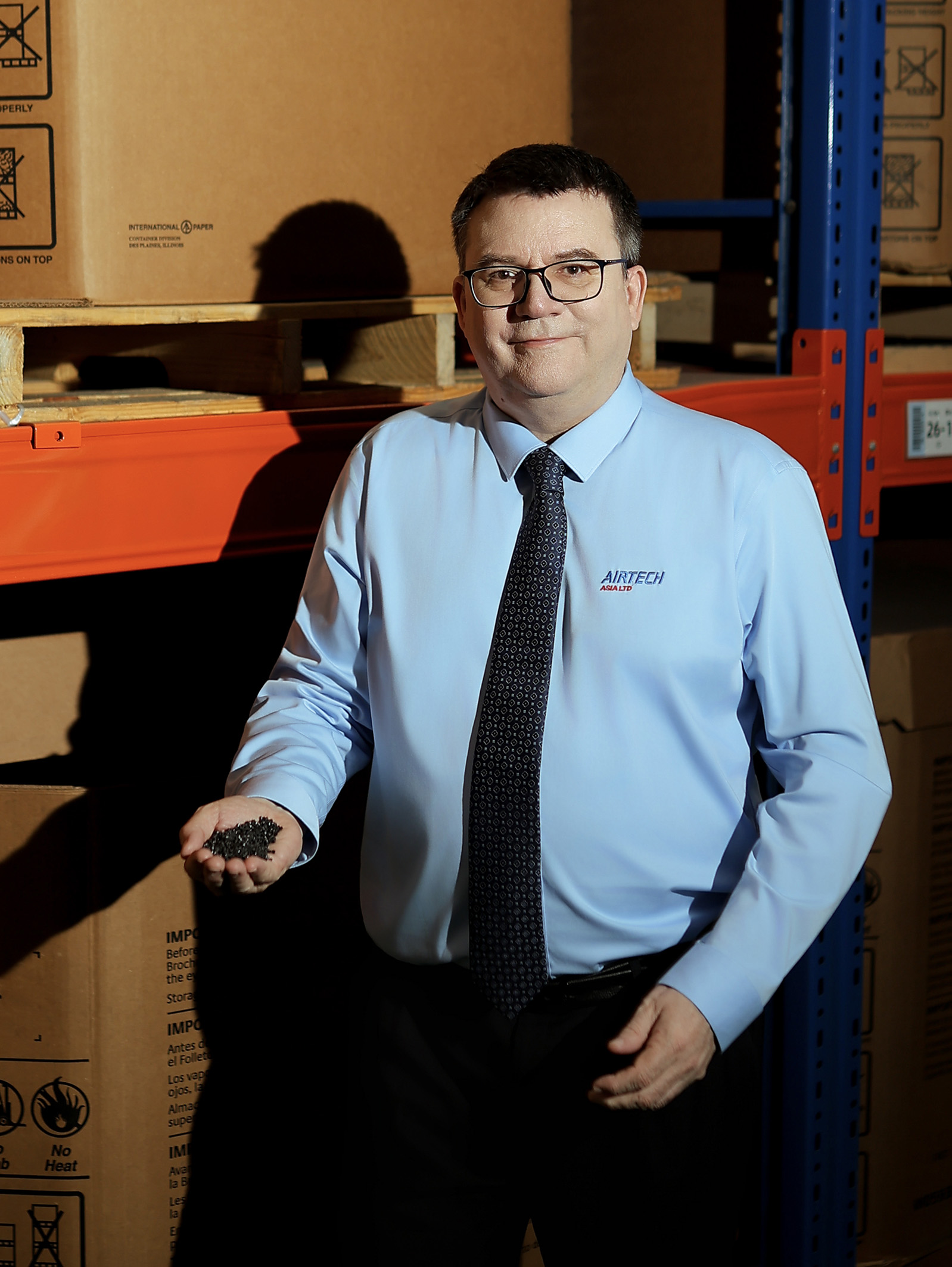
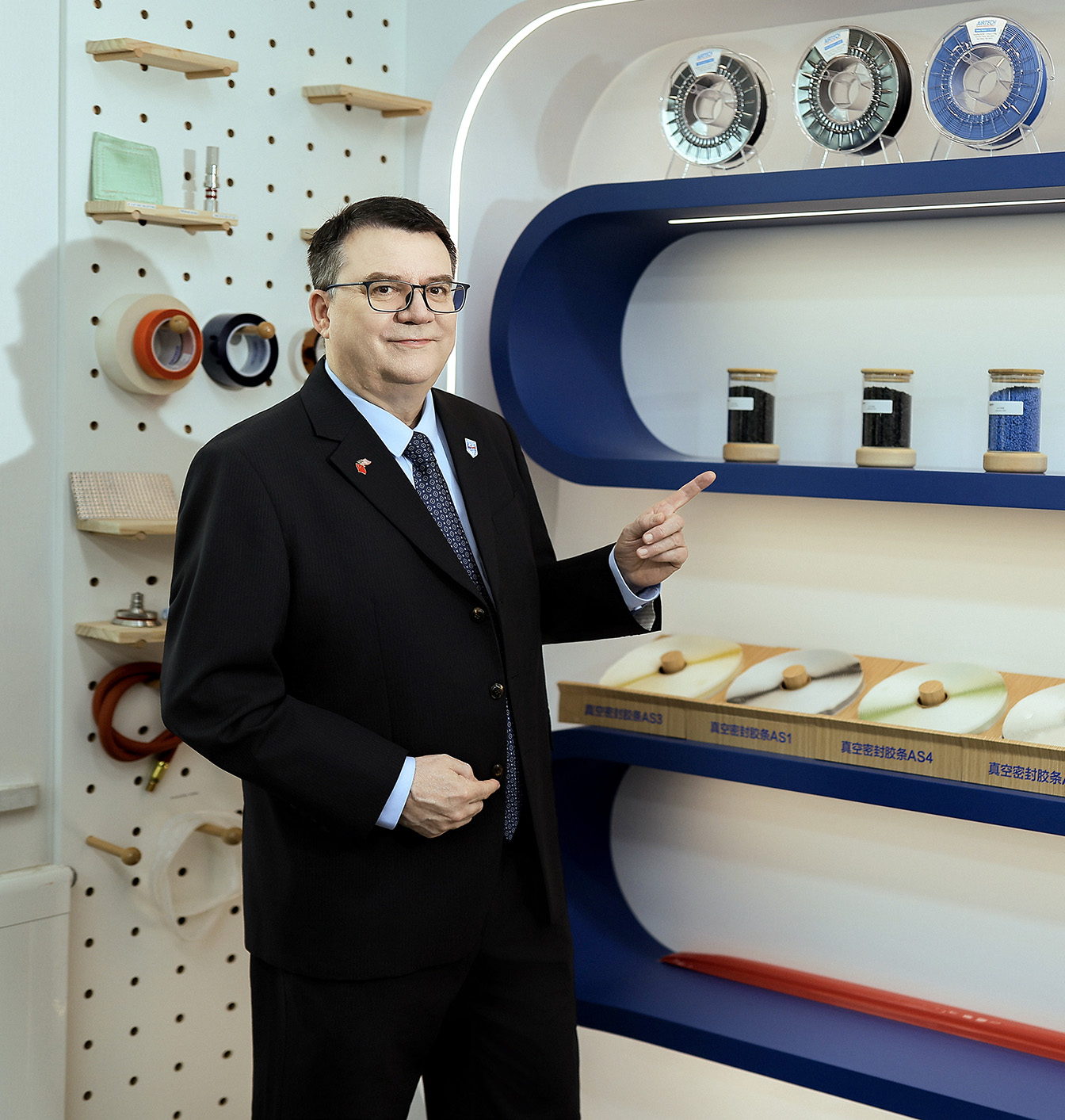
Wolfgang van Hooff has served as General Manager of Airtech Asia since 2017, overseeing operations at the company’s Tianjin facility. Airtech, founded in California in 1973, is the world’s largest supplier of vacuum bagging and composite tooling materials, with a strong presence in China’s aviation sector.
With over 37 years of global experience in engineering, management, and business development across 34 countries, and two decades in China, van Hooff has led industrial projects and technology implementation in sectors including ironmaking and zinc. He now focuses on advancing Airtech’s leadership in the advanced composite industry, in sustainability, recycling, and large-scale additive manufacturing.
Photo courtesy of Airtech Asia
As global industries push to meet ambitious ESG goals, the intersection of sustainability and advanced manufacturing is emerging as a critical space for innovation. Few companies embody this convergence better than Airtech Advanced Materials Group, and few executives understand the challenges and opportunities better than Wolfgang van Hooff.
Airtech Asia is the China-based division of Airtech Advanced Materials Group, a global manufacturer of vacuum bagging and composite tooling materials used in aerospace, wind energy, marine, and automotive sectors. With operations in Tianjin since 2007, the company has steadily expanded its local presence while introducing innovations in sustainability and additive manufacturing, including bio-based fabrics and recyclable 3D printing resins. Its work reflects the broader push across high-tech industries toward greener, more efficient production.
Van Hooff has spent nearly 25 years living and working in China and now serves as General Manager of Airtech Asia, overseeing the company’s rapidly growing Tianjin operations. Beyond his work at Airtech, van Hooff is an active member of the AmCham China Tianjin community. This past year, he even joined the Tianjin Chapter’s Executive Committee in a bid to further improve the business climate for foreign enterprises at both the local and national levels.
In a wide-ranging conversation with AmCham China Quarterly, van Hooff reflects on China’s evolving regulatory landscape, the future of additive manufacturing, and the role of advocacy in strengthening the business environment.
Sustainability with Substance
Sustainability is a key competitive advantage for multinational companies operating in China. And, van Hooff believes this change is long overdue. “At Airtech Advanced Materials Group, we have a global approach to sustainability and ESG disclosure,” he says. “We are committed to environmental, social, and corporate responsibilities and to making a positive impact on the world we live in.”
That impact is built on four key strategic pillars: carbon neutrality and energy efficiency; innovative technology and development; circular lifecycle management (reduce, reuse, recycle); and community engagement through strategic partnerships and education. Van Hooff explains that for Airtech, these pillars are not just aspirational, they are being actively implemented at scale. In Tianjin, Airtech Asia runs multiple recycling lines that reprocess in-house production waste. The company has launched a new series of products under the trademarked “Huangbaomo” line, offering recycled and partially recycled materials alongside its Made-in-China Econolon offerings. It is also innovating with bio-based materials like Enconoweave, a breathable fabric made from natural fibers.
But Airtech’s most notable breakthrough is its DAHLTRAM 3D print resins, thermoplastic polymer materials that are 100% recyclable after use. This technology helps customers in aerospace, automotive, and other high-performance sectors meet strict sustainability targets while reducing material waste and increasing cost efficiency. “Innovation in materials is at the core of our sustainability journey,” van Hooff notes. “We’re investing in solutions that are both high-performance and environmentally responsible.”
Powering the Future
Airtech’s Tianjin facility has also made investments in solar power generation and environmental protection equipment, reflecting the company’s commitment to decarbonizing operations.
“Last year, we implemented solar power at our Tianjin facility, and we are continuously expanding our capacity,” van Hooff says. “We also have state-of-the-art environmental protective equipment that is closely monitored to meet local and international standards.”
These investments are part of the company’s initiative to localize manufacturing and strengthen supply chain resilience in response to changing global circumstances, including economic uncertainty, trade issues, and geopolitical developments.
3D Printing and the Rise of Additive Manufacturing
Airtech is not only redefining sustainability standards, it’s also transforming how things are made.
“We have emphasized a lot on our expansion in the area of large-scale additive manufacturing,” van Hooff explains. “Based on more than 50 years of experience in compounding high-tech resins, we successfully developed the Airtech DAHLTRAM resins specifically for 3D printing applications.”
Traditional resins used for injection molding are often not suitable for 3D printing. Airtech’s proprietary compounds, however, are optimized for the pellet-based printing process, which allows the production of large, complex shapes at a fraction of the time and cost of traditional manufacturing.
Airtech already operates 12m x 3m 3D print and machining centers in the United States and Luxembourg. By early 2026, the company plans to launch a hybrid 3D print and machining center at its Tianjin factory, significantly enhancing local prototyping and manufacturing capabilities.
“There is tremendous interest in this technology—not just in aerospace, but in architecture and even consumer goods,” van Hooff says. “We’re also expanding into filament-based printing with our KIMYIA® line, made in Luxembourg, to support more diversified applications in China.”
“Innovation in materials is at the core of our sustainability journey. We’re investing in solutions that are both high-performance and environmentally responsible.”
Partnering with China’s Aerospace Industry
Airtech’s relationship with China’s aerospace sector dates back to 1982. Over the past four decades, the company has evolved into a strategic partner, not just a supplier. “We support customers like COMAC on the C919 and C929 projects, and we also work with global OEMs like Boeing and Airbus, as well as the fast-growing UAV and VTOL sectors,” van Hooff explains. “Since 1982, Airtech has been servicing the aviation industry in China. That makes us one of the longest-standing and leading partners in the Chinese composites space.”
With the establishment of Airtech Asia in 2007, the company strengthened its local presence and broadened its customer base. Today, Airtech’s advanced composite materials are used not only in aerospace, but also in high-speed trains, wind turbines, automotive components, marine vessels, high-end glass production, and even sports equipment, reflecting the company’s cross-sector adaptability.
“Innovation and superior quality for high-end applications are what set us apart,” van Hooff says. “We’ve built a very competent, experienced, and reliable local team, and continuous education and training are part of our DNA.”
“Our Tianjin facility has grown significantly in size and capability,” he adds.
A Veteran Perspective
Having lived in China for nearly 25 years, van Hooff has a unique vantage point on the country’s industrial transformation.
“The changes have been phenomenal,” he says. “China has evolved from a labor-driven economy to a global leader in innovation and sustainability.”
Van Hooff is realistic about the current challenges facing foreign businesses: “Tariffs, overcapacity in some sectors, and global competition from markets like India and Vietnam are all part of today’s landscape.”
But rather than retreat, Airtech is doubling down on China through intelligent foresight, investment in local capabilities, and a flexible, adaptive approach.
“We stay close to our customers’ needs and adapt our products and processes accordingly,” he says. “That’s how we stay competitive in a globalized but unstable environment.”
Supporting the AmCham China Tianjin Chapter
Van Hooff sees his role on the Tianjin Chapter’s Executive Committee as a natural extension of his leadership at Airtech. “It’s a synergy,” he says. “Improving the business environment for AmCham members also benefits Airtech and our community.”
He identifies strategic advocacy as one of the Chapter’s top priorities, particularly fostering dialogue between member companies and government stakeholders. “Supporting businesses and advancing a transparent, fair, and improving work environment is a key goal we should focus on,” van Hooff says. “Our contributions to the annual American Business in China White Paper are crucial. Its accuracy reflects the most pressing issues facing our members, and presenting clear, evidence-based arguments helps drive improvements in Tianjin’s business climate.”
Looking ahead, van Hooff sees strong potential in leveraging Tianjin’s unique advantages. “It’s a major port city, an advanced manufacturing hub, and close to Beijing. That gives us strategic positioning,” he notes. “We can build AmCham Tianjin’s reputation as an indispensable voice and trusted partner for US businesses.”
He also stresses the importance of engagement and visibility. “Understanding our members’ needs, whether to keep them engaged or to bring in new participation, will help grow the community,” he says. “Championing signature events and maintaining a credible presence on social media are key to ensuring the Tianjin Chapter remains a strong and constructive support for US companies in China. I believe we have a few exciting years ahead of us.”
This article is from the AmCham China Quarterly Magazine (Issue 3, 2025). To access the entire publication for free, sign up on our member portal here.