
Learning in the Age of AI: How China’s International Schools Are Adapting

Future Trends & Predictions
As AI continues to evolve, international schools are looking ahead to how it will shape education in the years to come, from redefining teaching roles to transforming assessments and student preparation for the future workforce.
“In the next five years, AI will transform education through personalized learning, cognitive partnering, and reimagined assessment—each requiring careful implementation to preserve essential cognitive development. Personalized learning will evolve beyond simple content adjustment to create adaptive pathways responding to student interests, preferences, and emotional states. The most effective systems will maintain productive struggle within Vygotsky's Zone of Proximal Development, supporting students while gradually developing independence. In complex disciplines, AI will function as a collaborative thinking partner, suggesting experimental designs or alternative mathematical approaches. The challenge will be implementing these tools to enhance capabilities without encouraging cognitive offloading. Assessment systems will evaluate complex performances with unprecedented sophistication, enabling authentic tasks previously limited by grading constraints. This shifts education from achievement-focused models toward agency-centered approaches that develop deep thinking and metacognition. These developments will reshape rather than replace teaching. Effective educators will leverage these technologies while ensuring students develop deep comprehension rather than superficial learning habits, focusing on building the neural architecture for wisdom that represents education's true purpose.”
Hao Zhai
Technology Director, International School of Tianjin
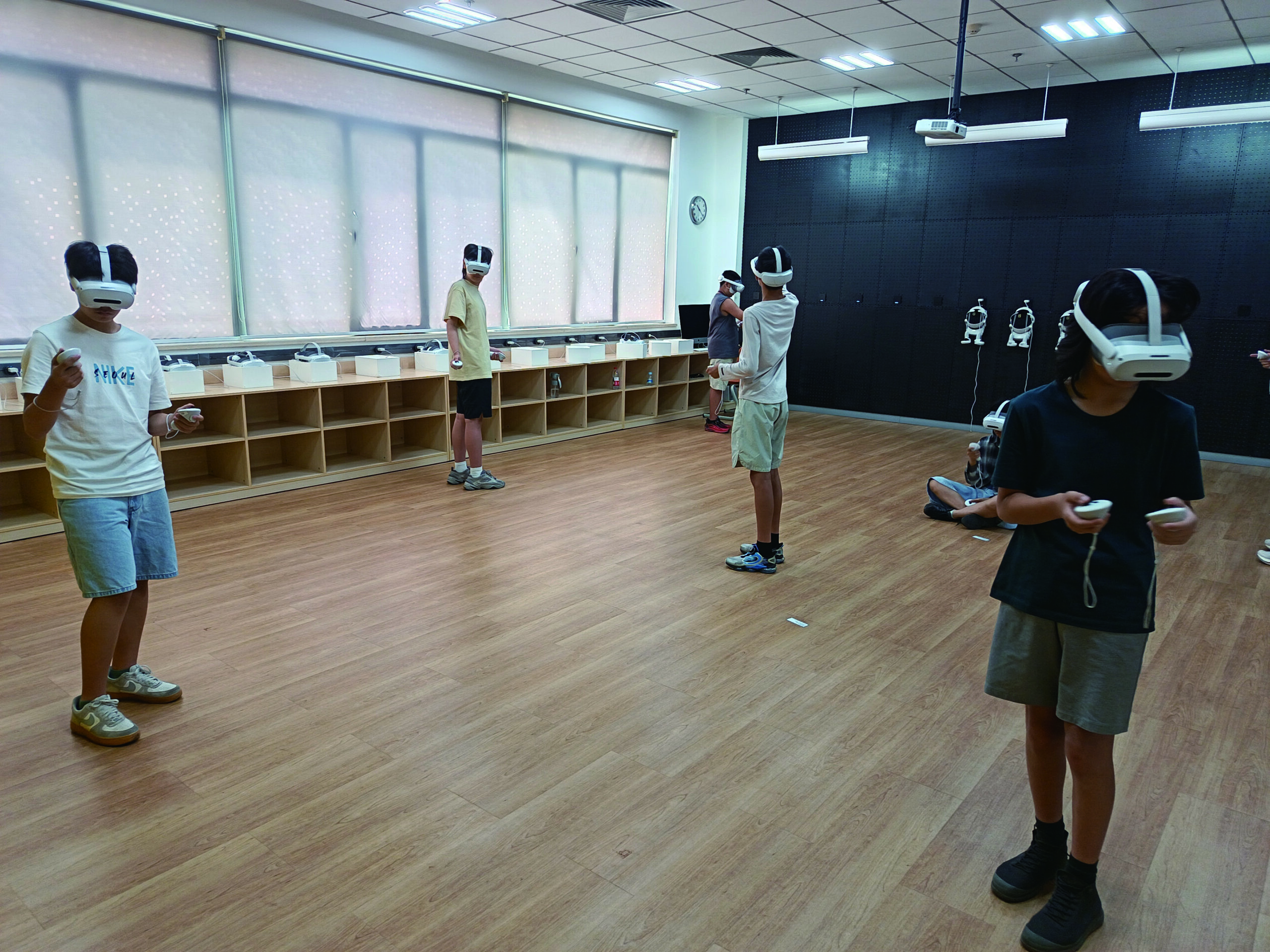
Students explore and learn during a VR/AR lesson
Photo courtesy of the International School of Tianjin

“I believe AI will not reduce the need for human teachers; instead, it will redefine their roles. My perspective is shaped by my experience as a Diploma Programme (DP) economics teacher and an assistant DP coordinator. Our school emphasizes holistic education, spanning from kindergarten through secondary education. Academically, human teachers play a crucial role in guiding students through systematic learning. For instance, teachers can steer students toward projected learning outcomes by overseeing their learning pace and process, which is challenging for AI to replicate, as it requires nuanced understanding and flexibility of human teachers. Moreover, human teachers are essential in developing specific student learning skills and dispositions. Teachers serve as role models, demonstrating behaviors and attitudes that students can emulate. This human touch is invaluable, as it allows students to learn not just through instruction, but also through observation. Additionally, teachers can monitor and support students' emotional and behavioral well-being throughout their learning journey. They can also structure the learning environment to foster collaboration and self-management skills. These evolving educational needs place new demands on teachers. They will be facilitators of student learning and play a more active role in building student skills and dispositions.“
Monica Cao
Assistant DP Coordinator and DP Economics Teacher, Chengdu Meishi International School
“AI will redefine teaching while reinforcing—rather than reducing—the need for skilled educators. As content delivery, routine assessments, and administrative tasks become increasingly automated, the essential human elements of education will be brought into sharper focus. AI may feel like magic, but behind the marvels lies mathematics. It’s a sophisticated tool with specific capabilities and limitations. Teachers are uniquely positioned to demystify these tools, helping students understand the mathematical foundations that drive AI’s seemingly magical abilities. The most effective educators empower students to master learning by applying the right tools for the right tasks, unlocking learning experiences that would be otherwise impossible. In this evolving role, teachers orchestrate environments where AI-supported activities are balanced with human interaction. They act as guardians against the short-circuiting of cognitive processes, ensuring students engage in productive struggle rather than outsourcing their thinking. Educators also help preserve deep reading experiences that nurture inferential, analogical, and empathic thinking, skills developed through guided human effort, not technological shortcuts. These shifts demand more sophisticated pedagogical expertise. Educators must take proactive approaches to integrating technology, anticipating potential downsides before adoption, and prioritizing clear, purposeful learning goals over simple efficiency.”
Hao Zhai
Technology Director, International School of Tianjin
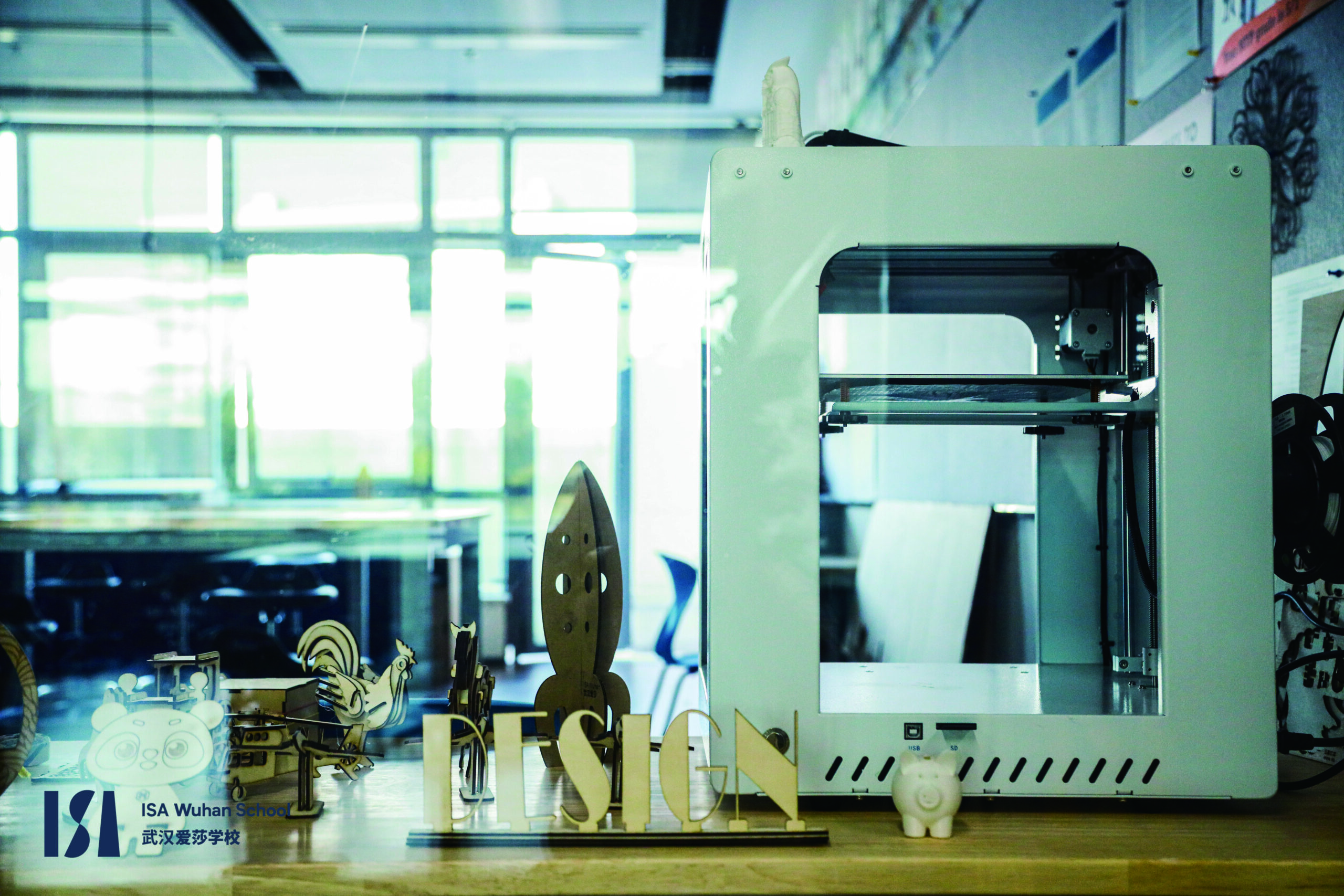
A 3D printing class allows students bring their creativity to life
Photo courtesy of Tianjin International School

“As the education world continues to gain a deeper understanding of what AI will do to change the way people learn, we are presently living in a state of not yet understanding. We don’t know what the education world will look like in five, ten, or twenty years, or how the generation that grows up with AI embedded into their lives will use it to educate the next generation. However, educators know that AI cannot replace the developmentally critical relationship that exists between students and teachers. Teachers represent non-familial adult relationships in a child’s life that have an immeasurable societal impact in raising the next generation. Teachers must learn how to utilize AI in their teaching, but we must never let AI become the primary teacher.”
Ryan Witt
Head of School, Tianjin International School

“I don’t think AI will eliminate the need for human teachers, but it will certainly redefine their roles and make teaching more efficient. AI can be used for content creation and administrative tasks. This will reduce teachers’ workload and leave more time for them to focus on more meaningful tasks such as fostering positive relations with students, promoting collaborative discussions or providing personalized feedback. For example, for our Honors classes, we have cut down in-class instruction to four class periods per week, giving students one day a week to self-study or get tutoring help. This is possible because AI-enhanced tools allow for more self-study and independent work.”
Robert Christensen
Principal at Optics Valley International School
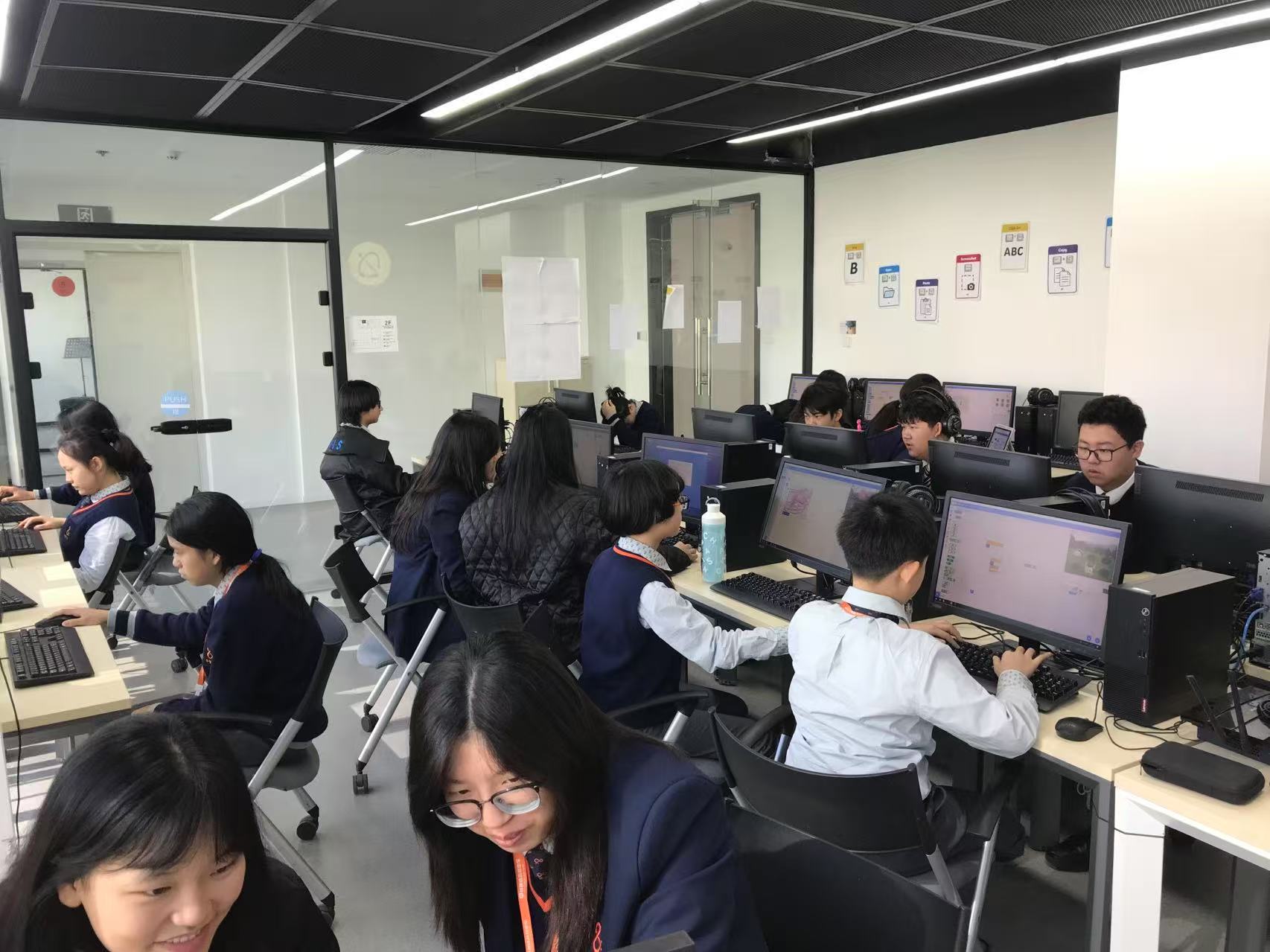
Students using the ‘Scratch System’ before using AI to check their work
Photo courtesy of Optics Valley International School
“Preparing students for an AI-driven workforce requires balancing technical fluency with distinctly human capacities. Learning is an adventure that transcends the mere accumulation of facts or mastery of skills. At its heart, education should enrich human life – equipping individuals with the tools to understand their world, appreciate the nuances of their experiences, and ultimately craft a life of purpose and meaning. True learning thrives through a dynamic cycle: confronting meaningful problems, developing creative solutions, and refining ideas through experimentation. Schools should nurture this process by anchoring education in students' innate curiosity. When students tackle problems they care about, they cultivate fundamental competencies: learning independently, embracing mistakes as growth, leveraging feedback, collaborating effectively, and adapting to evolving technologies.”
Hao Zhai
Technology Director, International School of Tianjin

“As students grow into an ever more rapidly changing world, it is essential we give them hope, agency and innovative opportunities underpinned by strong foundations in knowledge and skills that can withstand changes. The most valuable lifelong and employment skills remain those that AI cannot replace, such as communication, collaboration, critical thinking, passion and drive. The influences of AI on higher education, industry create challenges and opportunities for their future pathways, and exploration of these should be built into career guidance. Students can explore the implications of AI and other external forces on their areas of interest, uncovering new and emerging careers and professions, and seeking opportunities. Schools can support this through ongoing research, connection with external agencies, and industry.”
Stephen Taylor
Director of Innovation in Teaching and Learning, Western Academy of Beijing

“The school provides structured training to ensure teachers are confident and proficient in using AI tools. Through the EdTech Teachers’ Learning Community, we offer sessions on AI tools such as Tassomai and Kognity, explore VR integration, and examine the implications of generative AI on academic honesty. We also provide training on our Virtual Learning Environment (VLE), including platforms like Microsoft Teams and OneNote Class Notebook, to help teachers effectively blend AI into their instruction. In addition, teachers receive regular updates on our GenAI Policy and practical guidelines for using tools like the WCC Group ChatGPT via Teams. Hands-on pilots and action research are encouraged—for example, teachers may trial tools like Curipod or use Kognity in science classes to assess their impact and share best practices. We also support professional growth through recognition and certification. Teachers are encouraged to become Microsoft Innovative Educator Experts (MIEEs) and to participate in competitions such as the Microsoft Imagine Cup Junior, which foster innovation and collaboration with AI.”
Dr. Yang
Head of Tianjin Wellington College

AI and Mental Health
As AI tools become more common in schools, educators and students are starting to reflect on their impact beyond academic.

“At our school, we’ve seen both positive and negative effects of generative AI tools on students’ learning, stress, and creativity. AI tutors and writing tools provide personalized support and instant feedback, which can reduce stress and enhance learning, especially when teachers aren’t immediately available. However, over-reliance on AI can hinder students’ development of critical thinking and creativity. Some use AI to complete assignments without engaging deeply, which weakens understanding and confidence during assessments. To guide responsible use, we follow the QSI Responsible AI in Learning (RAIL) framework. This framework promotes mission-driven, ethical, and balanced AI use in schools. We teach students to use AI as a support—after producing their ideas—rather than as a substitute for thinking. Through our structured AI Literacy Levels, students learn how to use AI reflectively, ethically, and in ways that align with our educational goals. We aim to help students benefit from AI while still building independence, curiosity, and integrity in their learning.”
Christian Wang
Teacher (Science & Mathematics), QSI International School of Chengdu

“AI acts like a study buddy to me, but I’m aware that relying too heavily on it isn’t beneficial. From my perspective, overdependence on AI can create a false sense of understanding, it can make you believe you know more than you actually do. That’s why I discipline myself to use AI alongside my own learning. I use it to check my work, get feedback on areas for improvement, and find references to support my ideas. I always keep academic integrity in mind, ensuring that my work is based on my own thinking, with AI used only to refine and enhance it. This approach gives me more confidence in my work and overall progress. As an IB student, I’m constantly expected to process my own thoughts and express them clearly in assignments like essays and reflections. Taking part in the IB journey, my main goal is to cultivate the IB learner profile and reflect that growth personally. AI is a supportive tool in that process, but if I rely on it to do everything for me, I’ll ultimately learn nothing and gain nothing—which goes against the purpose of being an IB student. This mindset helps me use AI responsibly and confidently, without feeling anxious. I remind myself that true learning comes from critical thinking and effort, not shortcuts.”
Student
ISA Wuhan International School
As international schools across China – and the world – grapple with the rapid evolution of artificial intelligence, one thing is clear: AI is not a passing trend; it is a defining force in the future of education. From classrooms to counselors’ offices, lesson planning to student projects, AI tools are already reshaping how learning is delivered, supported, and understood. Yet amid this transformation, a resounding message emerged from educators, students, and administrators alike: technology must serve learning, not replace it.
The responses in this feature reflect a landscape of cautious optimism. Schools are embracing AI’s potential to personalize learning, streamline instruction, and enhance operational efficiency. They are also acutely aware of the risks: overreliance, academic dishonesty, inequity in access, and the loss of critical thinking and creativity. In response, institutions are establishing thoughtful policies, fostering responsible use, and prioritizing professional development. Some, like WAB and Wellington College Tianjin, are leading with structured ethics frameworks and AI literacy initiatives. Others, such as ISA Wuhan and QSI, stress the importance of human connection and integrity in navigating the digital shift.
Students, too, are finding their footing. Many view AI as a useful ‘study buddy’ one that can help accelerate understanding, but does not substitute for their own thinking. Their reflections highlight an encouraging maturity: a growing recognition that learning is more than efficiency and ease; it’s about engagement, curiosity, and ownership. As one IB student put it, “AI is a tool to refine and enhance, but true learning happens through effort and critical thought.”
Looking ahead, we can expect AI’s influence to deepen. Curriculum changes, personalized pathways, cognitive partnering, and reimagined assessment models are on the horizon. But rather than fearing disruption, these schools are preparing for evolution. Teachers are being called not only to adapt but to lead, to become guides, mentors, and interpreters of AI’s role in meaningful education.
Ultimately, these institutions are not asking if AI belongs in education. They are asking how to use it ethically, equitably, and effectively, to ensure that every innovation serves a higher purpose: preparing students to thrive in a complex, AI-augmented world, without losing sight of the values and relationships that make education truly transformative.
in the international education business for their participation.

This article is from the AmCham China Quarterly Magazine (Issue 2, 2025). To access the entire publication for free, sign up on our member portal here.