
Vice Chair Min Qin on Collaboration and Resilience in a BANI World
With nearly 30 years of experience at the intersection of business and policy, Min Qin has built her career on fostering trust, understanding, and collaboration. Now navigating what some people call a “BANI” world (Brittle, Anxious, Non-linear, and Incomprehensible) she draws on her role as Vice President for Public Affairs at Mars China and Vice Chair of AmCham China to share perspectives on leadership, advocacy, and the future of US companies operating in China.
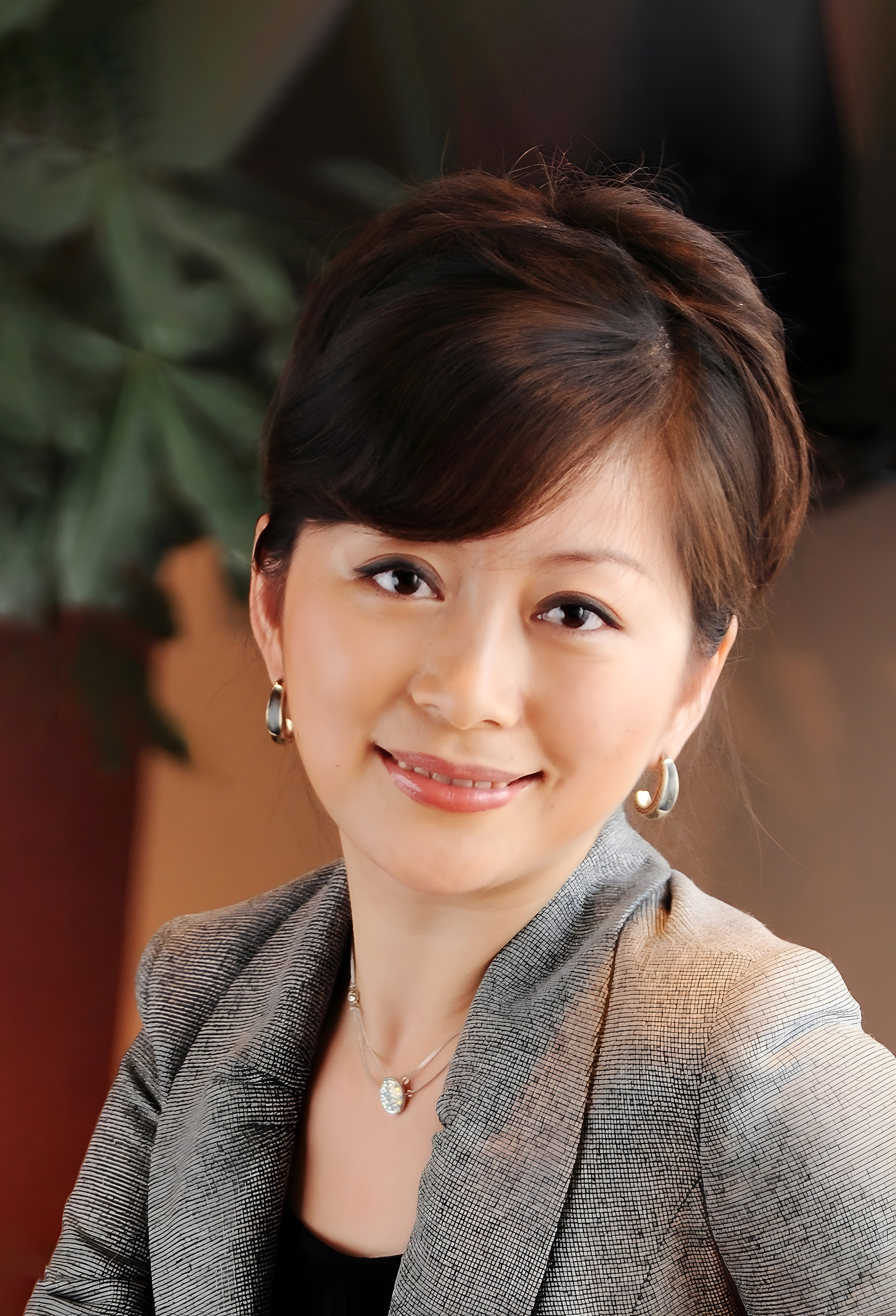
Min Qin is Vice President for Public Affairs of Mars China. She joined Mars in 2018 and leads Mars’ efforts to build and grow strategic partnerships with key public stakeholders at both central and local levels, conduct policy advocacy in key categories Mars operates in, formulate public affairs strategies, and protect and promote Mars’ corporate reputation. Min started her career with the public sector and then worked with McKinsey and Fonterra, building and leading their external affairs function in Greater China.
Photo courtesy of Mars China
Can you share an overview of your career and the key lessons you’ve learned along the way?
Min Qin: I have spent nearly three decades working at the intersection of business and policy, with a focus on bridging between and among various stakeholders to create shared value. What has remained dear to my heart over the years is the passion for fostering mutual understanding and building trust.
The most important lessons I’ve learned are to learn to unlearn, stay humble, and always be open to new ideas; never assume you already know. It is also important to stay agile, embrace change, and seek growth opportunities along the way. And finally, to treasure trust, this is what gives meaning to all conversations and collaborations and is key to success.
You served on the AmCham China Board before becoming Vice Chair this year. What lessons from those earlier terms guide you today?
Min Qin: My earlier terms on the Board coincided with periods of significant uncertainty, from pandemics to shifting geopolitical dynamics. It is usually during times like those that people appreciate the power of unity and value every chance to meet and talk.
AmCham China’s great strength is its ability to convene, to bring together diverse voices, distill common priorities, and present them clearly to policymakers. These strengths are still very much in demand today. Now, AmCham is better connected, better represented, and more experienced and resilient. We continue much-needed advocacy efforts in a principled and pragmatic way that represents our broad membership.
From your perspective, what do policymakers in Washington and Beijing most often misunderstand about the realities foreign companies face on the ground in China?
Min Qin: People can only understand each other better when they have ample chances to communicate and do so in a transparent, constructive way. Today’s world is described by some as BANI – Brittle, Anxious, Non-linear, and Incomprehensible. What makes it even harder is the complexity of operating in China’s fast-evolving market, from consumer expectations to digital transformation; the pace of change is extraordinary. AmCham China plays a vital role in bridging these understanding gaps by providing nuanced, real-world insights. We truly believe more people-to-people exchanges could help with the mutual understanding of the two most important economies in the world.
What are the most pressing policy priorities for the rest of this year?
Min Qin: From a company perspective, our top priorities include strengthening supply chain resilience through diversified sourcing and logistics solutions, promoting regulatory transparency and predictability to reduce operational uncertainty, and improving the overall business environment to encourage innovation and long-term commitment.
We will continue engaging constructively with both US and Chinese stakeholders to advance these priorities and achieve practical, mutually beneficial outcomes.
How can AmCham China better engage both SMEs and multinationals?
Min Qin: AmCham China is proud of its broad membership and is committed to serving the members by protecting and advancing their interests. While recognizing the common themes for the American business community in China, we also endeavor to tailor our value proposition by sectors, sizes, and differing focus areas of our members. From our observation, for example, SMEs tend to prefer practical guidance, networking, and market-entry support, while multinationals in general are more interested in strategic advocacy, regulatory insights, and peer-to-peer learning.
By differentiating engagement strategies while maintaining a shared platform for all, we aim to make all members feel equally supported.
Mars China has recently launched new facilities in Tianjin and Guangzhou. How do these investments reflect Mars’ long-term strategy in China?
Min Qin: Since entering China in 1989, Mars has been committed to this fast-growing market, continuing to expand our footprint to meet evolving consumer needs while positively impacting local communities. Our two latest investments, the Tianjin pet food factory and the Guangzhou ice-cream factory demonstrate this commitment. The Tianjin facility is our largest pet food factory in Asia, while the Guangzhou site is our third ice-cream factory globally. With seven factories in China across snacks and pet food, several R&D centers (including a Global Food Safety Centre), and 8,000 Associates, Mars is dedicated to innovation and serving diverse consumer needs.
In Mars we are guided by our Five Principles. One of the principles is Mutuality, by which we believe business growth and positive social impact go hand in hand. Through initiatives such as packaging sustainability, Better Cities for Pets, and community engagement programs, we strive to create lasting benefits for people, pets and the planet.
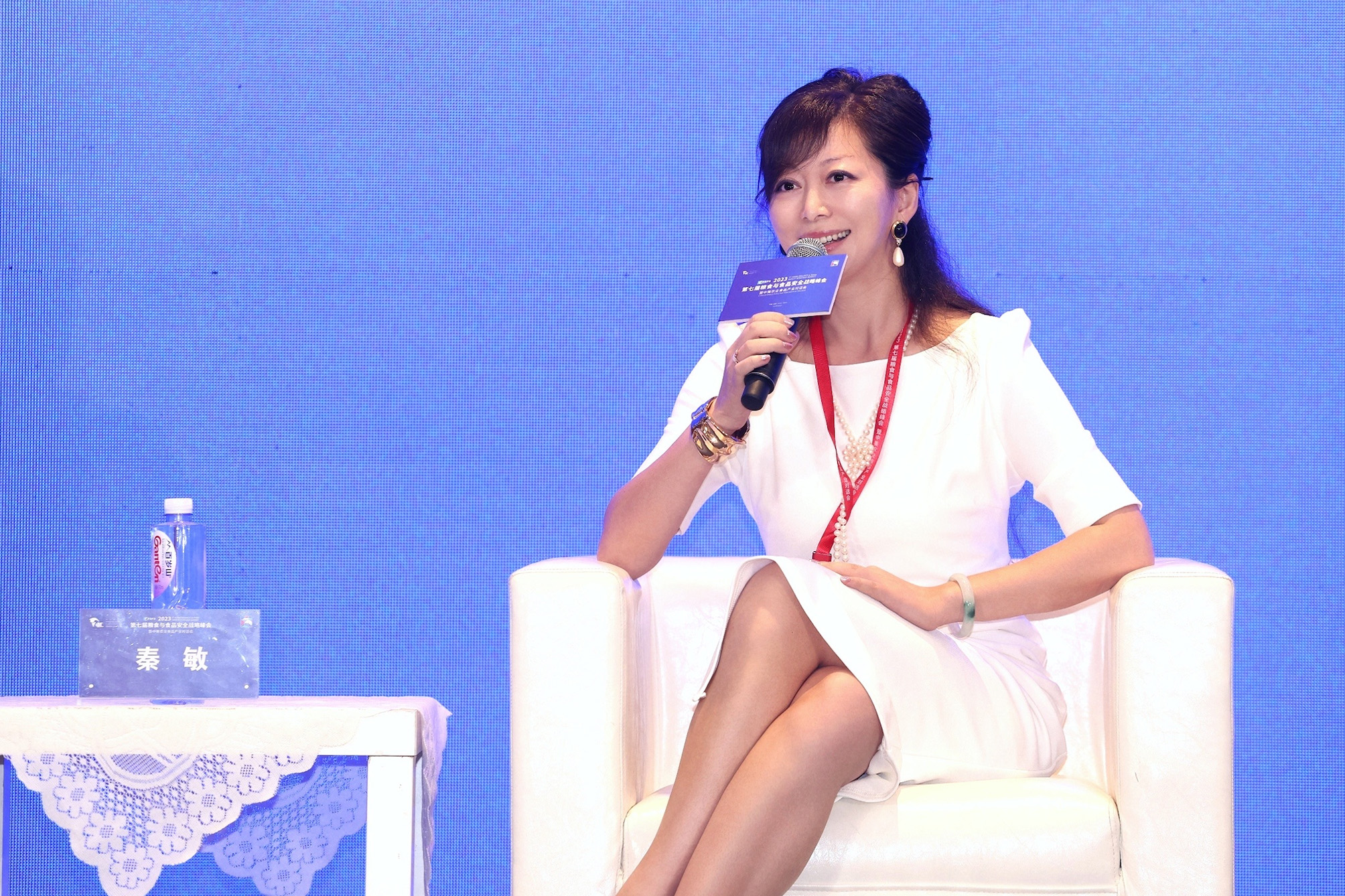
Min Qin speaking at the World Manufacturing Convention in Hefei
Photo courtesy of Mars China
How do Mars China’s packaging innovations support sustainability and consumer engagement?
Min Qin: At Mars, we believe the world we want tomorrow starts with what we do today, and doing what is right can drive business success. We launched our Sustainable in a Generation Plan in 2017 and have so far invested nearly US $3 billion globally to support a comprehensive sustainability strategy. In 2023, we published our Net Zero Roadmap, committing to Net Zero emissions by 2050. By 2024, we had reduced greenhouse gas emissions across our value chain by 16.4% compared to 2015 levels, while growing our business by 69%.
Packaging innovation is central to this effort. Mars is committed to making 100% of its packaging recyclable, reusable, or compostable. By 2024, 64.1% of consumer-facing packaging globally was designed for circularity. In China, we developed over 30 types of recyclable mono-material packaging.
Consumer engagement is also critical. Over the past two years, Mars partnered with CR Vanguard to lead packaging recycling events, reaching 4 million people nationwide. Collected plastics were repurposed into benches and bins installed in parks across 10 cities. With industry partners, Mars also launched the Flexible Reborn Initiative to improve the recycling of flexible plastics. By 2024, over 18,000 tons of flexible plastics had been gathered, equivalent to about 2.3 billion plastic bags, across 39 cities, reaching more than 13 million urban residents.
Looking ahead, what are the greatest opportunities and challenges for US companies in China, and how can AmCham China support them?
Min Qin: China is a huge and vibrant market with a growing middle class, vast talent pool, fast-moving digital innovation, and a high-potential green economy. Opportunities are abundant, though challenges vary by sector. For consumer goods, supply chain stability and competition are among the top-ranking challenges. But challenges are not always counter-productive; if used well, they can make us stronger.
AmCham China can help US companies by providing timely insights, facilitating dialogue, and creating platforms for best practice sharing and policy advocacy.
In both my Mars and Chamber roles, I believe in the power of connecting, between people, ideas, and across markets, geographies and cultures. When we truly listen, share, innovate, and work together, we can navigate challenges and seize opportunities in ways that benefit all.
This article is from the AmCham China Quarterly Magazine (Issue 3, 2025). To access the entire publication for free, sign up on our member portal here.