
Cooler Cities, Cleaner Tech: How Carrier is powering China’s next generation of Commercial HVAC solutions
By Norris Tangen
As China intensifies its focus on sustainability and infrastructure modernization, global HVAC leader Carrier is evolving to meet the moment. The AmCham China Quarterly sat down with Cissy Wang, Managing Director of Carrier China Commercial HVAC, to learn how the company is advancing green innovation, sector-specific solutions, and intelligent systems across the country’s commercial and industrial landscape.

Cissy Wang, Managing Director, Carrier China Commercial HVAC. Cissy brings experience from previous roles at Carrier including a robust skill set in Product Management, Sales, Engineering, Marketing Strategy, Marketing Communications, to name a few. She holds a Bachelor of Science from Xi’an Jiaotong University and an MBA from the University of Hong Kong.
Photo courtesy of Carrier China
Carrier’s story begins in 1902 with the invention of the first modern air-conditioning system. This innovation not only laid the foundation for an entire industry but also ushered in a new era of comfort. In the 1980s, Carrier became one of the first multinational air-conditioning manufacturers with operations in China, entering the market through a joint venture with their partner, Shanghai Electric. In the years since, Carrier has massively expanded its footprint in China.
“At present in China, we operate multiple R&D centers and manufacturing bases, all committed to driving green and sustainable development with new quality productivity,” says Cissy Wang, Managing Director of Carrier China Commercial HVAC (CHVAC).
You may not realize it, but chances are you’ve been cooled, warmed, or comforted by a Carrier system. Their technology is behind many of China’s most iconic buildings, including around 69% of the 2008 Beijing Olympic venues and all three permanent buildings of the 2010 Shanghai World Expo.
With a stronghold across commercial real estate, skyscrapers, shopping malls, transportation hubs, and public infrastructure, Carrier China CHVAC is now focusing on high-growth sectors like data centers, new energy, electronics, cleanroom pharmaceuticals, senior care, and healthcare. “For each vertical, we develop tailored CHVAC solutions that address unique operational and regulatory needs,” Cissy notes.
Strategic Transformation
To meet the evolving needs of the Chinese market, Carrier China CHVAC has undertaken a strategic transformation, focusing on sustainability, lifecycle services, and industry-specific solutions.
“In mature markets like China, where urbanization is already advanced, we prioritize modification solutions that improve comfort, energy efficiency, and carbon reduction throughout the equipment lifecycle,” says Cissy.
Carrier China CHVAC’s transformation is anchored on three strategic pillars:
- Customization for key verticals: Solutions are tailored for sectors like data centers and advanced electronics.
- Lifecycle solutions: Carrier now supports the full product journey, from delivery to long-term service and upgrades.
- System integration: High-performance chiller plants and integrated systems reduce emissions and optimize energy use.
“By proactively building multi-dimensional capabilities to support long-term development, Carrier China CHVAC is well-positioned to sustain high-quality growth,” she explains.
“This strategic approach enables us to meet current market demands while confidently seizing future opportunities and navigating emerging challenges.”
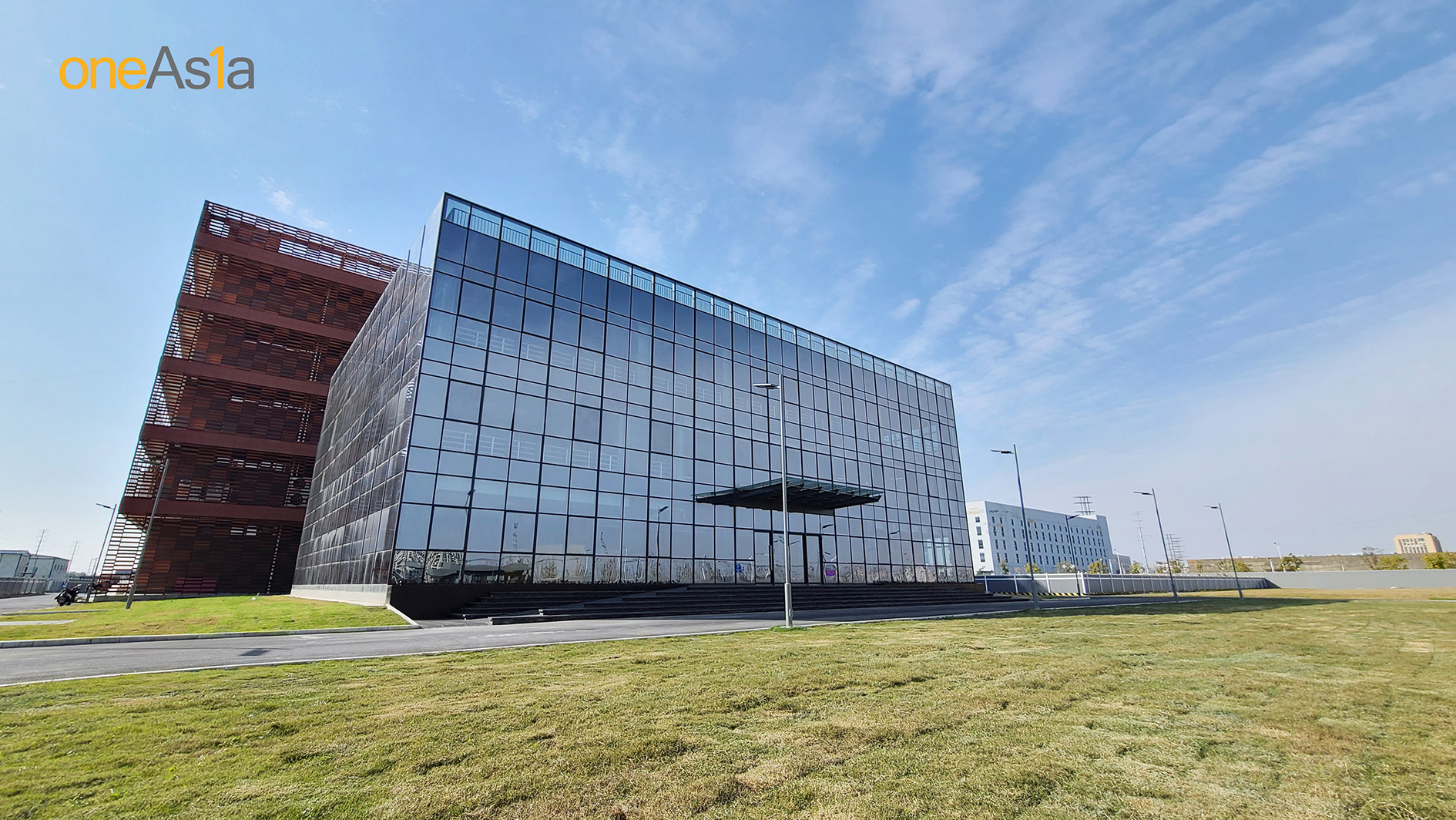
OneAsia Nantong Data Center
Photo courtesy of Carrier China
Investment in Innovation
Cissy says that innovation and differentiation are central to Carrier’s DNA. In 2024 alone, the company invested nearly US $700 million globally in research and development. “Carrier is now a transformed company, focused on sustainable HVAC and energy management, developing integrated solutions for customers, commercial buildings, data centers, and factories,” Cissy says.
“Carrier plays a crucial role in enhancing energy efficiency and reducing carbon emissions globally.”
Carrier’s centrifugal water-cooled and high-efficiency air-cooled chillers are widely adopted across industries, including in data centers where energy usage is mission-critical. The company’s flagship 19DV centrifugal chiller, which uses low-GWP refrigerants, is one example of its push toward environmentally responsible innovation. “Our digital platforms enable full lifecycle carbon management from measurement to monetization,” Cissy says.
And Carrier’s always working on new advances: the company’s global innovation engine includes seven i3 Labs (imagine, innovate, ignite), including one in China, where teams incubate and validate cutting-edge ideas using customer-centric design and rapid prototyping.
“Carrier is a transformed company, focused on sustainable HVAC and energy management, developing integrated solutions for customers, commercial buildings, data centers, and factories.”
Smarter Commercial HVAC Solutions
As China’s CHVAC market becomes increasingly sophisticated, Carrier China CHVAC has expanded beyond hardware, offering intelligent, connected solutions that can adapt to dynamic environments. “We are expanding our offerings beyond hardware, integrating digitally enabled and connected lifecycle solutions that adapt to changing environments, delivering both comfort and energy efficiency,” says Cissy.
The company offers different tiers within each product line, including low-GWP refrigerants, to meet regional regulations and customer sustainability targets.
“Our comprehensive aftermarket offerings include remote monitoring and diagnostics, predictive maintenance, spare parts, repairs, modifications and upgrades, rentals and other cutting-edge digital services,” she adds.
Carrier’s digital tools include the Carrier Abound suite, the Lynx digital ecosystem, and ALC’s WebCTRL building automation system.
Supporting Emerging Industries
Carrier China CHVAC is increasingly working with emerging sectors that demand precision, efficiency, and environmental compliance, especially data centers, which can consume massive amounts of energy for cooling alone. “In data centers, cooling can account for up to 40% of total energy consumption,” Cissy says. “This represents a critical opportunity to reduce environmental impact. Our high-efficiency equipment and digital lifecycle solutions are purpose-built to ensure reliable and energy-efficient operations in this sector.”
Carrier’s recent investments underscore this commitment. In 2024, the company partnered with Strategic Thermal Labs (STL) to develop liquid cooling technologies. In 2025, it launched Carrier QuantumLeap Data Center Solutions, an end-to-end suite covering everything from chip to chiller.
“QuantumLeap delivers intelligent cooling, predictive monitoring, and tailored services. It’s scalable, adaptable, and designed to ensure real-time optimization across the most demanding environments,” Cissy explains.
Delivering Sustainability and ROI
For Carrier, sustainability isn’t just a corporate value; it’s a customer value proposition. The company’s full lifecycle solutions help clients achieve measurable returns while reducing environmental impact.
A standout example is Carrier China CHVAC’s partnership with OneAsia for a data center in Nantong Industrial Park. The high-efficiency water-cooled chiller plant saves approximately RMB 1.27 million (US $180,000) in annual electricity costs.
“This was also OneAsia‘s first PLC-based data center project in China using Carrier’s proprietary CCN framework,” Cissy highlights. “We participated in PUE planning, dynamic load analysis, and group control strategy, delivering a comprehensive energy optimization package.”
In another case, Carrier China CHVAC installed energy-efficient centrifugal chillers and heat pumps at Terminal 3B of Chongqing Jiangbei International Airport to support terminal expansion. Carrier also provides consulting services to optimize chiller plant performance, enhancing overall system energy efficiency. This comprehensive HVAC solution will help the airport meet its sustainability goals and maintain a comfortable indoor environment for millions of travelers each year.
“These are not one-off installations—they’re long-term engagements built on shared sustainability goals,” she adds.
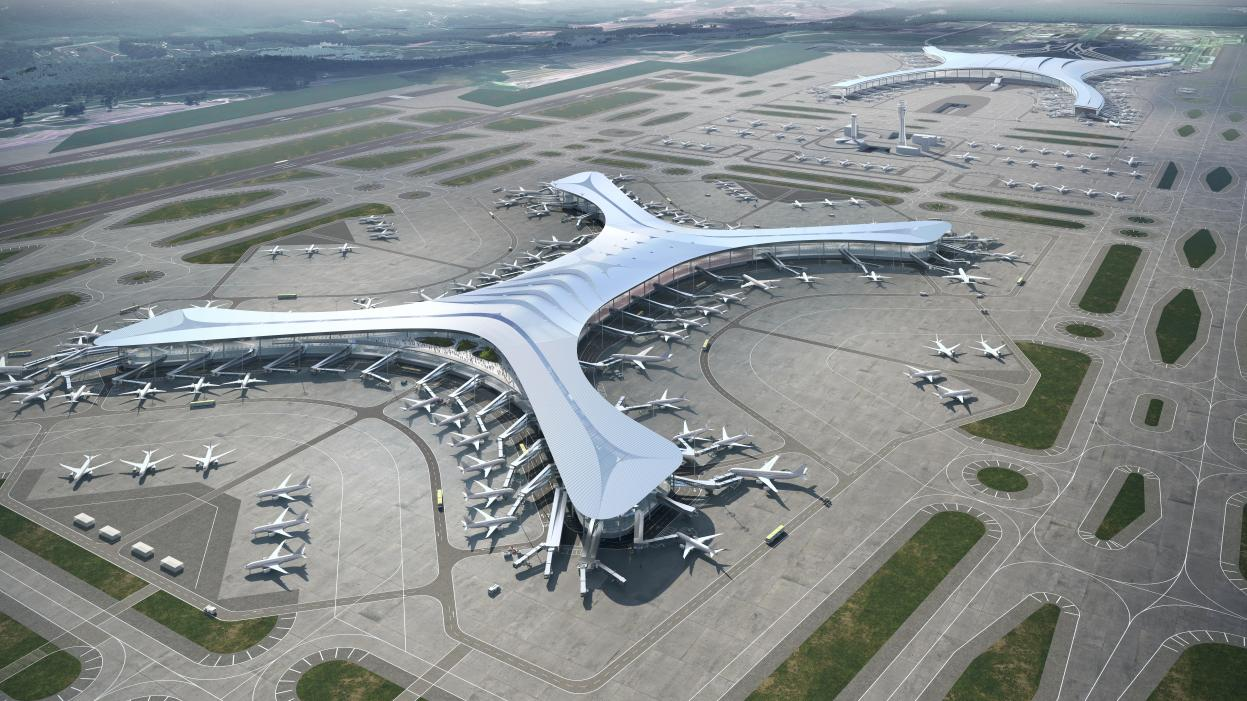
Terminal 3B of Chongqing Jiangbei International Airport
Photo courtesy of Carrier China
Sustainable Manufacturing
Carrier embeds sustainability throughout its manufacturing and operations. “At our seven manufacturing bases in China, including two CHVAC manufacturing facilities, we combine Carrier’s global technologies with local execution, guided by our Carrier Excellence operating system,” Cissy says.
The company uses Manufacturing Execution System (MES) tracking systems, visual dashboards, and analytics to drive precision and efficiency. In 2024, the Carrier Airside & Compressor factory (CARS) was recognized as a Shanghai Green Factory.
“True to our tagline, ‘For the World We Share’, Carrier China embed environmental responsibility throughout our operations and value chain — designing, sourcing, producing, and delivering innovative solutions to reduce emissions, conserve resources, and align with China’s green development goals,” she affirms.
A Greener Future
As China charts its course toward carbon neutrality and technological leadership, Carrier China CHVAC stands ready to support this transformation. Carrier views its future in China as an opportunity to drive intelligent, sustainable HVAC innovation at scale.
“Carrier’s long history in China has been about more than selling equipment—it’s been about building relationships, solving industry challenges, and supporting national priorities,” Cissy concludes. “With our global innovation engine, local execution, and customer-centric mindset, we’re excited to shape the next era of intelligent, sustainable CHVAC.”
This article is from the AmCham China Quarterly Magazine (Issue 3, 2025). To access the entire publication for free, sign up on our member portal here.